
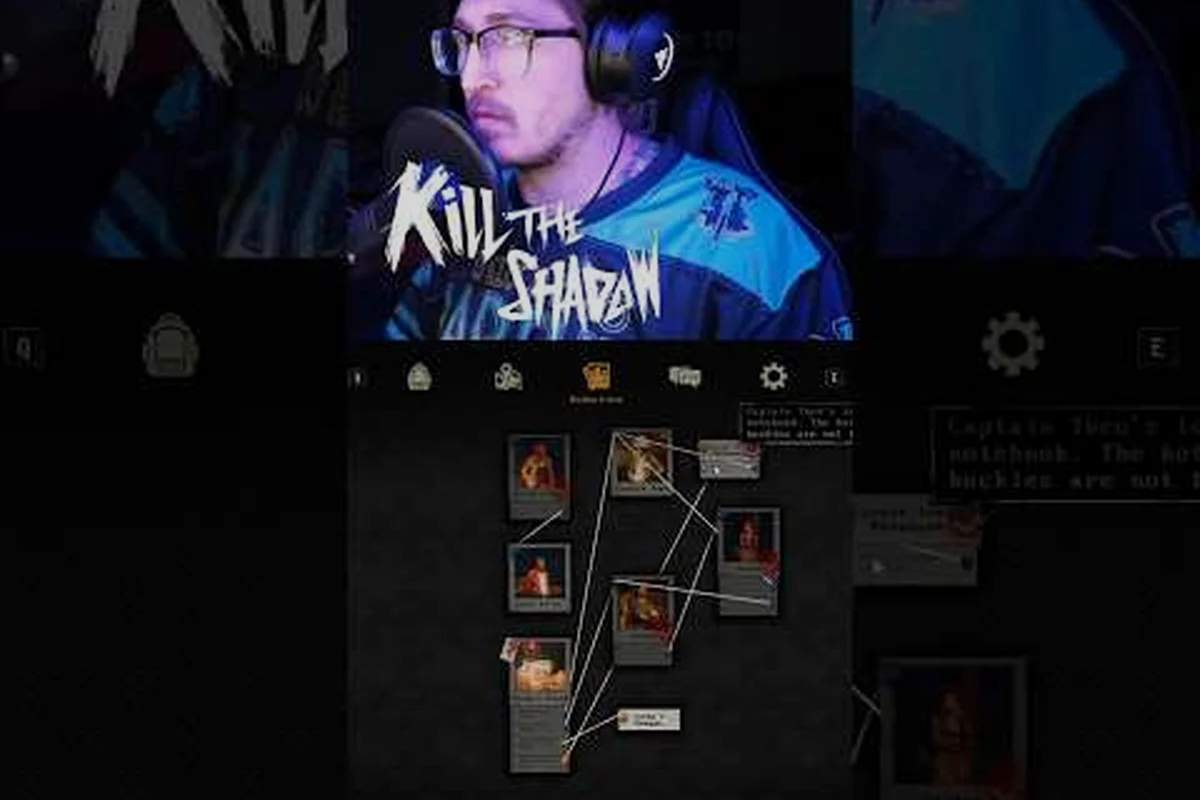
The Griff Flint Citou family storyline threads through some of the most haunting chapters of Kill The Shadow, pulling former cop Lucas into a web of buried debts, missing heirs, and half-remembered crimes across Dark Tide City. Because the game's corkboard deduction system treats every family tie as a potential thread, understanding how Griff Flint, the Citou family, and their shared history connect is essential for any detective who wants to reach the truest ending. Below you'll find the full breakdown of who these characters are, what they want, and how to use their relationships on your board. For a wider primer on the case system itself, see our Kill The Shadow beginner guide.
The Griff Flint Citou Family at a Glance in Kill The Shadow
When players first hear the names Griff Flint and the Citou family, they often land during separate cases in early-to-mid progression. The two threads eventually braid together in a chapter sometimes called the Family Ledger arc, where Lucas must reconcile a decade of unanswered questions about inheritance, witness tampering, and a partner's suspicious death. Both names appear on the in-game glossary and on loading-screen dossiers, which makes them easy to miss if you skip dialogue. The Griff Flint Citou family lore is presented through overheard conversations, archived newspapers, and rewound victim memories, so players who actively engage with environmental storytelling uncover the most pieces.
| Thread Anchor | Where It First Surfaces | Primary Case File |
|---|---|---|
| Griff Flint | Rooftop interview in the Rainmarket Quarter | Case 03: "A Borrowed Badge" |
| Citou family | Tea-house testimony in the Jade Hook District | Case 05: "The Crimson Letter" |
| Flint–Citou overlap | Evidence locker after Case 06 | Case 07: "The Family Ledger" |
| Reunion moment | Riverfront chapel flashback | Case 09: "What the River Took" |
Two things make this storyline distinctive in Kill The Shadow. First, the timeline is non-linear; you can meet younger versions of these characters through The Shadow's rewind mechanic before you ever meet them in the present. Second, the family records are scattered across three districts, so you cannot complete the arc without exploring the map rather than speed-running main quests. Players who tried to brute-force the chain during the August 2026 launch reported hitting dead ends because the prompt that unlocks Case 07 only fires after you have logged at least one Citou family testimony and one Griff Flint evidence card on the corkboard.
Griff Flint's Character Profile and Investigation Role
Background, Career, and Troubled Legacy
Griff Flint is a retired field operative whose career at the Dark Tide City Bureau of Investigation ended abruptly after an internal review board declared his testimony "unreliable." The in-game dossier describes him as a meticulous investigator who kept handwritten logs of every case he ever touched, which is precisely why his name keeps circling back when older crimes resurface. Players who choose the Spirit ability path can hear his voice echo through certain rewind memories, because his presence at past crime scenes registered strongly enough that The Shadow's supernatural resonance still clings to those locations. His brother figure, Axel Flint, operates on the opposite side of the law and serves as one of the most morally ambiguous witnesses in the game; their dynamic is one of the first places where Lucas must decide whether to expose or protect.
When Lucas first approaches him, Griff cooperates almost too easily. That openness is a deliberate narrative beat: Griff wants his record cleared, but he will not confess the parts he himself does not remember. The rewind mechanic becomes crucial here, because the only way to verify his testimony is to step into moments when he was drugged, coerced, or simply not present.
Evidence Ties and How His Case Connects
Griff's evidence ties fall into four loose clusters that the corkboard organizes automatically once you tag enough items. The table below summarizes how each cluster feeds into the larger arc.
| Evidence Cluster | Example Items | What It Reveals |
|---|---|---|
| Bureau paperwork | Signed witness sheets, badge requisitions | Which officers he worked with, who signed his transfer orders |
| Personal effects | Pocket watch, broken compass | Family heirlooms hinting at the Flint lineage and shared Flint heirlooms |
| Crime-scene residues | Cigarette stubs, blood-spatter cards | Moments where he lied about his location during rewind memories |
| Third-party testimony | Quotes from Rafe Carter, Captain Theodore | Cross-checks against other characters who knew him in the field |
The compass item deserves special attention. It bears the Flint family crest and reappears in Griff's apartment, in the Bureau archive, and—later in the story—on a Citou family altar. That single prop is the strongest visual cue that the two families were closer than either publicly admits. Players who place the compass on the corkboard before meeting any Citou family member will receive a unique dialogue option that unlocks a private confession scene with Chiffon (Xiao Citou).
The Citou Family Members Across Dark Tide City
The Elder Generation and Their Influence
The Citou family is one of the older mercantile clans in Dark Tide City, with roots in the Jade Hook District going back four generations. Their public reputation is built on the family's tea-house empire, but their private reputation hinges on a much more complicated arrangement with the Bureau. Auntie Bass is the elder most frequently encountered in gameplay because she runs the family teahouse where several witness interviews take place. She speaks in measured proverbs and only reveals key information when Lucas answers one of her three ritual questions correctly, which players can solve by reading the archived ledgers in Case 05.
The second pillar of the elder generation is Mrs. Reed (Madame Ruan), who is not a blood Citou but serves as the family's outside legal counsel. She is the bridge between the Citou family and the Bureau, and her testimony is the most legally watertight in the game, which makes her both an asset and a barrier. If you want to crack the family's outer shell, you have to find the discrepancy between her written affidavit and her oral statement—something the rewind mechanic can detect because The Shadow can replay her testimony at slightly different emotional pitches.
Chiffon, Rafe, and the Younger Citou Generation
The younger generation is where the family becomes a true mystery. Chiffon (Xiao Citou) is the family's acknowledged heir and the most sympathetic character in the arc. She is conflicted between loyalty to her elders and a desire to expose the truth about her cousin's death, which the Bureau quietly ruled an accident. Lucas can build her trust by sharing evidence that implicates Bureau officers rather than her family, a choice that affects whether she becomes a permanent ally or fades from the story after Case 09.
The complication is Rafe Carter (Rafe Fang), whose name appears in both Citou family records and Bureau internal files. His dual identity is one of the game's most discussed twists because it forces players to reconsider every piece of testimony he previously gave. The corkboard flags his name in red automatically once you connect him to a Citou family bank account, which is the visual cue that a major narrative pivot is about to happen. Players using the Strength ability path can confront him directly in a back-alley scene, while players on the Magic path can instead trap him inside a rewind loop where his confession plays repeatedly until he breaks.
| Family Member | District | Role in Story | Trust Path |
|---|---|---|---|
| Auntie Bass | Jade Hook | Elder, gatekeeper of family secrets | Answer her three ritual questions |
| Mrs. Reed / Madame Ruan | Bureau Quarter | Legal counsel, document expert | Compare her written and oral statements |
| Chiffon / Xiao Citou | Riverfront Chapel | Heir, sympathetic witness | Share Bureau-side evidence first |
| Rafe Carter / Rafe Fang | Rainmarket | Double agent, hidden Citou | Trigger the bank-account linkage on the corkboard |
| Priestess | Riverfront Chapel | Spiritual mediator | Bring her the Citou family ledger |
Hidden Citou Connections and Side Mentions
Beyond the named members, the Citou family surfaces in at least four side conversations that players commonly miss. A drunk dockworker in Case 04 mentions that the Citou family used to run the river ferry, which ties the family to the disappearance of two Bureau informants. A street musician in the Jade Hook District hums a melody that appears in the rewind memory of the family's deceased patriarch. A Bureau clerk offhandedly references "the Citou account" when Lucas is reviewing financial records. Finally, a Kiki side-conversation unlocks only if you visit the Citou family shrine at night, which requires the Spirit ability path to be at least rank two. None of these are mandatory, but together they form the connective tissue that gives the arc its emotional weight, and skipping them is the single biggest reason players report the Family Ledger chapter feeling shallow.
How the Flint and Citou Connections Shape Lucas's Cases
The Overlap: Why Both Families Matter Together
The deeper reason Griff Flint and the Citou family are discussed together is that the game's central mystery revolves around a Bureau operation that involved both lineages. In the 1990s in-game calendar, the Bureau recruited Griff as a junior operative while the Citou family acted as civilian intermediaries for an asset-forgery scheme that neither side officially acknowledged. When the operation collapsed, three operatives were reassigned and two Citou cousins disappeared from public record. The rewind memories that Lucas experiences are not random—they are residue from the moments when key people died or lied under oath.
This overlap is why the corkboard treats the two family threads as a single investigation node once you have tagged enough evidence. The game does not penalize you for treating them as separate cases early on, but you will not unlock the Truth Ending for the Family Ledger arc unless you formally link Griff Flint to at least two Citou family members before confronting Captain Theodore in Case 09.
Recommended Play Order and Strategy Tips
For players who want the smoothest path through this arc, the optimal evidence-gathering order is more important than leveling any single ability. The following table condenses community-tested strategies from players who completed the arc within the first two weeks of launch.
| Step | Action | Why It Matters |
|---|---|---|
| 1 | Talk to Auntie Bass during tea-house hours | Unlocks the three ritual questions and the Citou family ledger |
| 2 | Tag the compass item on the corkboard immediately | Triggers a unique confession option with Chiffon later |
| 3 | Use The Shadow to rewind Auntie Bass's testimony | Detects the subtle verbal slip that confirms she knew Griff personally |
| 4 | Cross-reference Mrs. Reed's affidavit with rewind footage | Reveals the Bureau's attempt to suppress the Citou ferry records |
| 5 | Confront Rafe Carter after the bank-account flag | Forces him to choose between his Bureau and Citou family loyalty |
| 6 | Bring the Priestess the recovered ledger | Unlocks the chapel flashback that explains Griff's true allegiance |
| 7 | Link Griff to two Citou family members on the corkboard | Required to access Captain Theodore's full confession in Case 09 |
If you want a broader set of investigation shortcuts, our Kill The Shadow tips and tricks article covers additional corkboard shortcuts that complement this sequence. For players who prefer a more combat-oriented approach, the best strategies for Kill The Shadow article also discusses how the Strength path affects this arc.
Branching Outcomes and Ending Implications
The way you close the Family Ledger arc determines which of three endings becomes available for the broader campaign. Choosing to protect Griff and the Citou family from Bureau exposure locks you into a Pardon Ending, which is the rarest because it requires you to have earned at least two pieces of corroborating evidence from independent witnesses. Choosing to expose both families but shield one member unlocks the Quiet Ledger Ending, which is the most morally complex because the person you protect carries the secret forward. Choosing to expose everyone equally produces the Public Reckoning Ending, which is the most narratively satisfying but also the most punishing for surviving characters like Chiffon. None of these endings is canonically correct, and the developers at Shadowlight have confirmed in their GamingBolt interview on Kill The Shadow that all three were designed to feel like legitimate conclusions.
Players who want to see every outcome can use the rewind mechanic strategically, since The Shadow lets you re-anchor a single decision point without replaying the entire chapter. This is one of the few places where the supernatural element of the game becomes a narrative tool rather than a gameplay gimmick, and it is a strong argument for investing at least one early ability point into the Spirit tree. For official store details, system requirements, and the demo build that lets you preview the early Citou family scenes, the Kill The Shadow Steam listing is the most authoritative reference.
Frequently Asked Questions
Who is Griff Flint in Kill The Shadow?
Griff Flint is a retired Bureau of Investigation operative whose career ended after an internal review declared his testimony unreliable. He is a central figure in the Family Ledger arc because his old cases overlap with the Citou family's private history.
What is the Citou family's role in Kill The Shadow?
The Citou family is one of Dark Tide City's older mercantile clans, with members including Auntie Bass, Mrs. Reed, Chiffon, and the secretly dual-aligned Rafe Carter. They serve as civilian intermediaries whose testimony unlocks the game's central mystery about a suppressed Bureau operation.
How do Griff Flint and the Citou family connect?
The two threads meet through a 1990s Bureau operation that used Griff as a junior operative and the Citou family as civilian intermediaries. Once Lucas links evidence from both sides on the corkboard, the Family Ledger arc formally opens and unlocks the game's most layered case file.
Which ability path is best for the Griff Flint Citou family arc?
The Spirit path is the strongest choice because it grants the rewind sensitivity needed to verify witness testimony, but a hybrid Spirit-Magic build also works well. The pure Strength path can still complete the arc, though it misses some of the emotional confession scenes.
Can you save Chiffon in Kill The Shadow?
Yes, but only if you share Bureau-side evidence with her before confronting Rafe Carter and if you avoid forcing a public reckoning against her family. Players who prioritize her trust path will see her survive into the post-credits chapel scene.
If you have uncovered a Griff Flint Citou family detail that we missed here, drop it in the comments and we will fold the strongest community findings into the next update of this guide.