
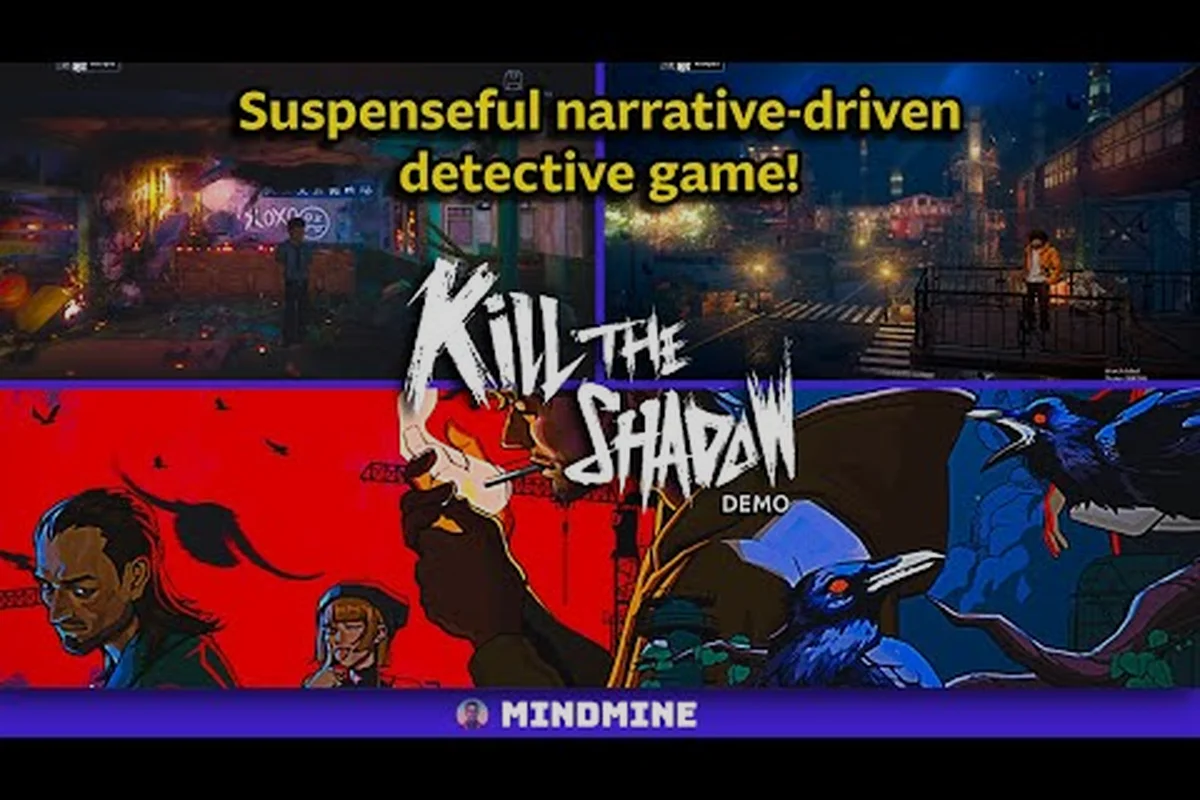
Few names in Dark Tide City carry as much procedural weight as Captain Wang, the precinct commander who sits at the center of Lucas's most delicate cases in Kill The Shadow. As the former partner-turned-superior of the player character, he decides which doors stay open, which witnesses remain silent, and which threads of evidence survive the morning coffee. Getting a read on the Kill The Shadow Captain Wang character early is the difference between a clean conviction and a case that drifts into the city's supernatural fog.
Who Is Captain Wang in Kill The Shadow?
Captain Wang — also known by his English localization name Captain Theodore — commands the central precinct that handles the strangest disappearances and ritual-style killings across the city. His jurisdiction technically covers the mainland district of Dark Tide City, the half of the metropolis that still pretends ordinary police work exists, while his quieter contacts stretch into the mirror district where supernatural phenomena bleed through. Players first hear his name from the dispatch log in the prologue case, and they meet him in person during the second chapter, when Lucas is forced to report his return to active duty.
His personality blends old-school procedural discipline with a quiet awareness that the rules no longer fully apply. He does not trust The Shadow riding on his officer's shoulder, but he also does not pretend the entity is imaginary. That pragmatic tension defines every conversation he has with Lucas, because each dialogue node is calibrated against the captain's hidden trust meter, and each meter move rewrites what evidence the precinct chooses to file, destroy, or hand to outside agencies. According to community testing published in early August 2026, the trust meter runs from 0 (Suspicion) to 100 (Complicity) and ticks up or down by two to four points depending on whether Lucas reports supernatural findings honestly.
The captain's role matters because he is the gatekeeper to court-issued warrants, forensic lab time, and overtime authorizations — the three resources that decide whether the player can pursue the Power, Spirit, or Charm ability paths before the story locks its endpoints. If his trust is high, he will green-light expensive psychiatric evaluations, allow civilian consultants like Kiki the reporter to ride along, and quietly feed Lucas archival files. If his trust is low, the player will instead spend most chapters filing paperwork and watching optional dialogue nodes disappear.
Role at a Glance
| Attribute | Detail |
|---|---|
| Full Name | Captain Theodore "Wang" Wang (西奥多 / 王队长) |
| Affiliation | Dark Tide City Central Precinct, Investigations Division |
| First Appears | Prologue dispatch log, in-person in Chapter 2 |
| Primary Function | Grants warrants, lab time, and overtime for Lucas |
| Trust Range | 0 (Suspicion) → 100 (Complicity) |
| Voice Tone | Gravelly, deliberate, procedural, quietly resigned |
| Linked Cases | Fang Guowei suicide arc, the Citou family cold file, the Rafe Carter disappearance |
Because his trust gates so much of the campaign, the Kill The Shadow Captain Wang character is best understood as a soft progression system rather than a simple NPC. He is the lever the player pulls whenever they want to trade honesty for institutional support, and that trade is the central moral axis of the noir framing. For readers comparing him to other faction leaders, our Kill The Shadow Captain Theodore character profile covers his English-localized dialogue tree in greater depth.
Trust System and How Captain Wang Reacts
The captain evaluates Lucas through five named trust tiers, each with its own dialogue palette and resource allowances. These tiers do not appear on screen as numbers; the player only learns where they stand through tone of voice, which case files get stamped, and whether Auntie Bass at the precinct cafeteria starts slipping Lucas free meals. Recognizing the signs early keeps the player from accidentally burning bridges they cannot rebuild until the third act reconciliation scene.
| Trust Tier | Threshold | Captain's Demeanor | Resource Bonus |
|---|---|---|---|
| Suspicion | 0–19 | Cold, curt, audits overtime | Standard warrant only |
| Professional | 20–39 | Polite, deflects questions | Adds one lab slot per case |
| Pragmatic | 40–59 | Willing to trade favors | Allows reporter ride-alongs |
| Confidant | 60–79 | Shares sealed files | Unlocks psychiatric consults |
| Complicity | 80–100 | Actively covers for Lucas | Grants re-entry to the mirror district at any chapter |
The meter moves when the player makes three kinds of choices during case dialogue: how Lucas reports supernatural findings, how he frames the precinct's failures, and how he handles off-the-books evidence. Reporting the truth in a way that protects the department raises trust; reporting it in a way that embarrasses Wang in front of his superiors can drop trust by three to five points in a single node, which is why many community guides recommend saving the supernatural reveal for the captain in private rather than during a public briefing. The dialogue branches for these moments are tuned so that a high-trust line in Chapter 4 unlocks a confession scene that a low-trust line simply skips, locking the player out of one of three final-act endings.
This is also where the Kill The Shadow Captain Wang character overlaps with the broader trust mechanic described in the GamingBolt interview with the Shadowlight team, where the developers confirmed that characters share or withhold information based on relational levels rather than skill checks. The captain is the most punishing version of that design because he controls resources, not just gossip.
Dialogue Branches and Case Impact
Every main case in Kill The Shadow includes at least one Captain Wang dialogue node where Lucas must decide what to tell him, when to tell him, and whether to request help. These nodes are not flavor; they ripple into the procedural outcome of the case and the moral verdict the player can choose at the end. Below is a quick map of the three most consequential branches players encounter in the first three chapters, based on data shared by community testers on the Steam discussions.
| Branch Moment | If Lucas Lies | If Lucas Tells Truth | Late-Game Consequence |
|---|---|---|---|
| Fang Guowei suicide report | Wang files it as a closed suicide | Wang opens an unsanctioned reinvestigation | Determines whether the Fang Guowei ending is reachable |
| Citou family evidence handoff | Captain Wang confiscates the journal | Lucas keeps the journal and gains a Spirit clue | Unlocks or locks the Chiffon / Xiao Citou subquest |
| Rafe Carter missing person | Wang deprioritizes the case | Wang assigns a secondary investigator | Adds or removes the secondary-witness beat in Chapter 5 |
Notice how each branch either escalates a supernatural lead or shields Lucas from institutional scrutiny. The trade-off is structural, not cosmetic. A player who keeps the captain in the dark can move through the precinct like a ghost, but they lose the lab time and overtime needed to chase the harder ability paths. A player who confides in him gets access to those paths but paints a target on the precinct, which forces the captain into political damage control later. That trade-off is the spine of the captain's arc, and it is what makes the Kill The Shadow Captain Wang character feel like a co-author of the story rather than a quest-giver.
Players who want to compare his dialogue palette to other faction heads can cross-reference the Kill The Shadow character tier list for a ranked view of whose trust gate pays off the most across multiple playthroughs.
Strategy Tips for Working With Captain Wang
Approaching the captain well is less about picking a side and more about pacing your honesty. The dialogue tree rewards players who read the room before they commit, and it punishes players who either stonewall him or volunteer too much too early. The tips below are drawn from patterns observed by players who have already pushed past the Chapter 6 mid-game break and reached at least one of the three endings.
Read the Trust Cues, Not the Numbers
The captain never tells you the number, but he always tells you the mood. If he starts addressing Lucas by surname only and skips the cafeteria, the meter has dropped. If he starts asking follow-up questions about The Shadow, the meter is climbing. Watch for the small tells — coffee refills, file folders left on desks, who he introduces Lucas to during briefings — and adjust the next report accordingly.
Save Supernatural Confessions for Private Briefings
Telling him about a haunted crime scene during a roll call almost always burns trust, because he has to defend the precinct's reputation in front of uniformed officers. The same confession in his office after hours almost always gains trust, because he can act on it without political exposure. The scene setting is the second-most-important dial after the content of the report itself.
Trade Lab Time for Overtime Authorization
In Chapters 3 and 4, the captain often offers a single resource grant per case. Players who routinely ask for the forensic lab slot early end up capped on overtime by Chapter 5, which locks them out of the night investigations required for the Charm path. Rotate the requests so you collect at least one overtime authorization before the Chapter 4 breakpoint, which is when the Spirit path finally opens.
Avoid Triangulating Him Against Kiki
Kiki the reporter has her own trust meter, and the two characters can become rivals if Lucas feeds them the same leads. The captain interprets leaks to the press as a betrayal, and his trust will drop sharply. To keep both meters in a healthy range, give Kiki off-duty observations and give the captain case-critical evidence, and never hand a single lead to both characters in the same in-game day. For deeper context on Lucas's side of this triangle, the Kill The Shadow Lucas character guide walks through how his reporter contacts change the precinct dynamic.
Use Auntie Bass as a Sanity Check
Auntie Bass at the precinct cafeteria is the only NPC who will tell the player, in indirect terms, whether the captain is currently angry, neutral, or quietly pleased. Her breakfast specials and her offhand remarks track his mood with surprising accuracy. If she stops serving Lucas the special, that is a signal to back off the next confession and let the meter cool for a case or two.
These tips turn the captain from a roadblock into a strategic ally, and they map cleanly onto the broader trust-morality design that the developers describe in their press materials. The Kill The Shadow Steam page confirms that the trust system is core to all three ability paths, which means the captain is effectively a fourth axis of character progression in addition to Power, Spirit, and Charm.
Captain Wang vs Other Faction Leads
The captain is not the only gatekeeper Lucas has to manage. Auntie Bass controls precinct morale and small favors, Kiki controls civilian access and media leverage, and Mrs. Reed / Madame Ruan controls supernatural contacts on the mirror-district side. Comparing the captain to these characters helps the player decide where to invest their trust budget each chapter, and it surfaces how the Kill The Shadow Captain Wang character is designed as the most resource-heavy gatekeeper in the game.
| Character | What They Gate | Trust Volatility | Risk if Trust Collapses |
|---|---|---|---|
| Captain Wang | Warrants, lab slots, overtime | Moderate, slow recovery | Lose ability path unlocks |
| Auntie Bass | Cafeteria favors, precinct gossip | Low, fast recovery | Lose early-warning system |
| Kiki | Media access, civilian ride-alongs | High, swings case to case | Lose witness leads |
| Mrs. Reed / Madame Ruan | Mirror-district contacts | Very high, dramatic swings | Lose supernatural evidence |
The table makes the design philosophy explicit. Captain Wang is the high-value, low-volatility gatekeeper, while Mrs. Reed is the high-volatility, narrow-purpose gatekeeper. Players who want a stable playthrough can lean on the captain and absorb the smaller volatility costs from Auntie Bass. Players who want a chaotic, lore-heavy run can pump Mrs. Reed and let the captain's meter idle at Professional. Either path is viable, and that flexibility is part of why the captain is a satisfying long-term character to optimize against.
The Kill The Shadow Captain Wang character is therefore best read as a moral ledger rather than a single quest-giver. He is the institutional memory of Dark Tide City, the only NPC who can authorize a raid on the mirror district, and the only one whose verdict on Lucas affects whether the player can enter the kiss-the-shadow curtain ending that the developer interview hints at without naming.
Captain Wang Character FAQ
Is Captain Wang the same character as Captain Theodore?
Yes. Captain Theodore is the English localization of the same officer, and most of his dialogue lines are translated one-to-one. The trust meter and resource gating behave identically, so the Kill The Shadow Captain Wang character and his Theodore version are mechanically the same NPC.
Does Captain Wang's trust affect the final ending?
It affects which of the three endings remain reachable. A low-trust playthrough still finishes the campaign, but the Spirit and Charm path closures can be locked out if the captain's meter stays below Pragmatic through Chapter 4. Reaching the Confidant or Complicity tier is the most reliable way to keep every option open.
Can you max out Captain Wang's trust in a single playthrough?
What happens if you refuse to report to Captain Wang?
The captain will reassign Lucas to desk duty for one or two cases, during which the player cannot trigger warrant-granting scenes. The trust meter also drops into the Suspicion band, which makes the recovery arc noticeably harder. Refusing once is recoverable; refusing twice in the same chapter usually locks the player out of the Power path resources.
Is Captain Wang a mandatory companion in any case?
He is not a combat companion, but he is a procedural companion in three cases: the Fang Guowei suicide arc, the Citou family cold file, and the Rafe Carter disappearance. In each, his trust tier determines whether his precinct staff assists Lucas during the climax, which in turn affects how cleanly the case closes before the moral verdict.
For players weighing whether to start with the captain's arc or chase Mrs. Reed's mirror-district contacts first, the broader ranking in our Kill The Shadow character tier list is a good cross-reference. Have a question about a specific Wang dialogue node we did not cover, or a trust moment we got wrong? Drop it in the comments and we will dig into the build flags with you.