
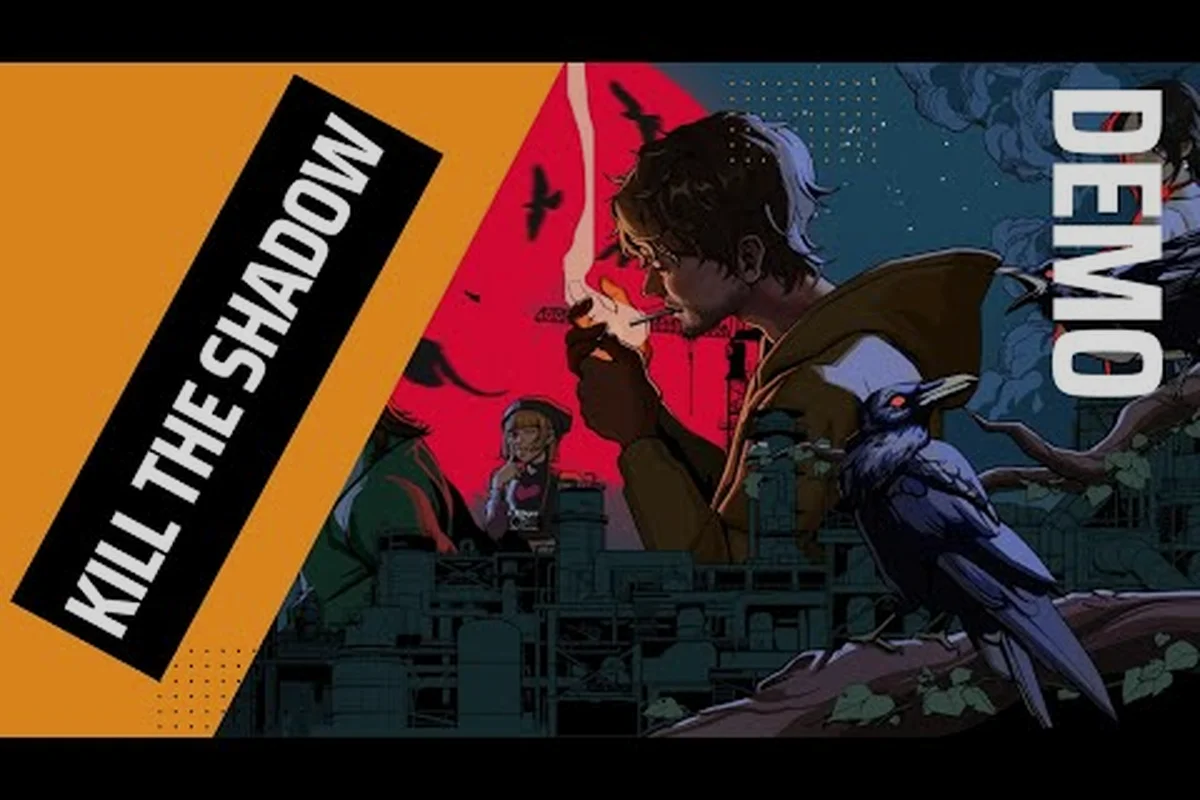
Kill The Shadow: The Shadow Entity Explained — A Complete Guide
Few indie RPGs in recent years have generated as much curiosity as Kill The Shadow, the 2.5D pixel-noir detective RPG developed by Shadowlight. Set against the rain-slicked, neon-glazed streets of Dark Tide City, the game puts players in the trench coat of hardboiled protagonist Lucas, a haunted detective carrying a literal demon on his back. That demon — known in the community simply as The Shadow — is the engine that drives every investigation, every leap through time, and every dark bargain the player can strike. If you have been piecing together lore, this deep-dive into The Shadow entity will give you the full picture.
In this guide we will break down what The Shadow actually is, how it binds to Lucas, the mechanics it powers (including the famous time rewind and corkboard deduction systems), how it interacts with the three core build paths (Strength, Spirit, and Charm), and how its presence reshapes the trust dynamics with characters like Captain Wang, Kiki, and Teddy. We will also look at the dark corners of Dark Tide City — including the infamous Pig Cage Walled City and the fog-shrouded Shipwreck Wharf — where The Shadow's influence is felt most strongly. For broader context, see our Kill The Shadow full story explained and our breakdown of how the ability system works.
What Is The Shadow Entity in Kill The Shadow?
The Shadow is not a sidekick in the traditional JRPG sense. It is a parasitic, sentient entity that fused with Lucas years before the events of the game, the result of a desperate bargain struck during the unsolved case that destroyed his former life. Visually, it manifests as a slithering, inky mass that coils around Lucas's shoulders and arms, occasionally forming a second face over his own when emotions run high. Mechanically, The Shadow is the player's primary "magic" resource — a pool of dark power that fuels supernatural abilities, dialogue intimidation, and the game's signature time rewind system.
The Nature of The Shadow
The Shadow is not evil by default, and this is one of the most important things to understand early on. In a GamingBolt interview, the Shadowlight team confirmed that The Shadow is more akin to a morally neutral spirit than a demon. It feeds on Lucas's guilt, ambition, and unresolved trauma — but it also responds to how the player treats the people of Dark Tide City. If you play a brutal, manipulative run, The Shadow grows stronger and more talkative. If you play a compassionate run, it becomes quieter, but its powers actually become more refined and precise. The official Shadowlight page at shadowlightgames.com describes the relationship as a "co-dependency that reflects the player's choices."
Visual Design and Aesthetic
The 2.5D pixel art deserves special mention here. The Shadow is rendered as a fluid, constantly shifting silhouette that overlays Lucas's sprite. In low-light scenes, particularly in the lantern-lit alleys of Pig Cage Walled City and the rain-drenched docks of Shipwreck Wharf, The Shadow almost looks like a second character walking beside Lucas. The developers confirmed in an InvenGlobal feature that this was a deliberate design choice — the entity is meant to feel present at all times, a constant visual reminder of the bargain Lucas has made.
The Origin of The Shadow: Lucas's Pact Explained
To understand the entity, you need to understand Lucas's backstory. Before the game begins, Lucas was a rising star in the Dark Tide City police department, partnered with Captain Wang. A high-profile case — the death of a young informant in Pig Cage Walled City — broke him. Unable to save the victim, and convinced that the conspiracy reached the highest levels of the force, Lucas turned to forbidden occult practices. The Shadow is the result.
The pact is never fully narrated in a single cutscene. Instead, players piece it together through the corkboard deduction system, scattering old case files, medical records, and ritual notes across the in-game board. If you want the full emotional context behind this, our Lucas backstory deep-dive covers every flashback in detail.
What The Shadow Gains
| Bargain Component | Shadow's Reward | Player's Cost |
|---|---|---|
| First Pact | Sustenance (trauma feed) | Permanent physical tether |
| Second Pact | Supernatural sight | Chronic pain and nosebleeds |
| Third Pact | Time manipulation | Memory fragments lost on each rewind |
| Final Pact | Full autonomy in dialogue | Lucas's identity becomes negotiable |
This four-stage pact is the structural backbone of the entire game. Each new "stage" unlocks deeper corkboard deduction capabilities, more aggressive time rewind charges, and a new tier of dialogue options — but at an ever-escalating personal cost.
How The Shadow Powers Affect Gameplay Mechanics
The Shadow is not just flavor text. It is mechanically inseparable from three of the game's most important systems: the time rewind ability, the corkboard deduction board, and the three core build paths. Understanding how the entity powers each one is essential to mastering Kill The Shadow.
Time Rewind and The Shadow
The time rewind mechanic is The Shadow's most iconic gift — and most dangerous weapon. By spending a charge of "Shadow Fuel" (gained by exploring trauma-heavy locations or completing morally grey objectives), Lucas can rewind a scene by up to ten minutes. Combat encounters re-resolve with enemy positions and HP restored. Dialogue choices can be revisited if a particular line of questioning produced new evidence.
However, The Shadow charges a tax. Each rewind drains a fragment of Lucas's memory, and over the course of a long playthrough, the player can lose access to entire codex entries. The Shadowlight team has confirmed that there is a "memory cap" — if you rewind too aggressively, Lucas will begin to forget the names of NPCs, including Kiki and Teddy, which can lock you out of optional questlines. Treat the rewind button like a loaded gun.
Strength, Spirit, and Charm Build Paths
The three builds in Kill The Shadow are all flavored around how Lucas and The Shadow interact with the world.
| Build Path | Primary Stat | Shadow Behavior | Best Playstyle |
|---|---|---|---|
| Strength | Physical combat | Shadow manifests as armor, less dialogue | Frontline brawler, brute-force deduction |
| Spirit | Supernatural power | Shadow speaks more, offers hints | Detective purist, heavy corkboard usage |
| Charm | Social influence | Shadow whispers manipulation cues | Diplomatic route, information trader |
A Strength build turns The Shadow into a literal battering ram, letting Lucas tank hits and break through sealed doors in Pig Cage Walled City. A Spirit build is the canonical detective experience — the entity whispers hints, highlights hidden evidence on the corkboard, and unlocks ritual-based solutions to locked cases. A Charm build turns The Shadow into a social parasite, feeding Lucas the exact words to manipulate suspects, with Kiki the reporter being especially vulnerable to this approach.
The Shadow and the Corkboard Deduction System
The corkboard deduction system is Kill The Shadow's answer to the detective gameplay of titles like Disco Elysium and Return of the Obra Dinn. The player collects physical evidence — fingerprints, blood samples, witness statements, photographs — and pins them to an in-game corkboard. Then, by drawing red string between related items, the player advances a case.
The Shadow's role in this system is subtle but profound. As you progress down any build path, the entity begins to "mark" certain pieces of evidence with a faint violet glow. These marked clues are always relevant, but they may be red herrings designed to test whether you trust the entity or your own judgment. A fully bonded Shadow (reached by completing all four pact stages) will instead highlight the correct connecting thread, dramatically speeding up case resolution.
The corkboard also acts as the player's save-state visual for time rewind. If you rewind a scene, the board snaps back with you, and any string connections you had made are preserved as "ghost threads" — translucent lines that show where you previously considered a link. This is one of the most elegant UI choices in modern indie RPGs.
Trust Levels: Building Relationships with the Cast of Dark Tide City
Kill The Shadow does not run on a binary morality system. Instead, it uses trust levels with each major NPC, and those trust levels directly affect what information that character shares with you. The table below summarizes the trust dependencies.
| NPC | District | Trust Gating Mechanism | Key Unlockable Content | Best Build for Trust |
|---|---|---|---|---|
| Captain Wang | Shipwreck Wharf | Resist Shadow's aggression | Internal police files, Fang Guowei truth | Spirit / balanced |
| Kiki | Pig Cage Walled City | Expose trauma (feeds Shadow) | Unpublished stories, Charm path | Charm |
| Teddy | Shipwreck Wharf | Fund independent work | Smuggling evidence, corkboard access | Strength / balanced |
| Priestess | Upper Districts | Treat Shadow as partner or parasite | Hex-casting aura, possible true ending | Spirit |
This is where The Shadow becomes most morally complicated.
In a confirmed feature from InvenGlobal, the team stated that Lucas's "primary relationships" — Captain Wang, Kiki, Teddy, and the enigmatic Priestess — all have trust meters that fluctuate based on how Lucas treats both them and the entity they can sense on his back. A high-trust Wang, for example, will quietly pass Lucas internal police files from the evidence locker at Shipwreck Wharf. A high-trust Kiki will share unpublished stories that contradict the official police narrative.
Captain Wang's Hardline Trust
Captain Wang is Lucas's former mentor, a by-the-book cop who suspects Lucas of corruption but is too loyal to act on it. Building trust with Wang requires resisting The Shadow's more aggressive dialogue options. If you let The Shadow intimidate Wang during key confrontations, his trust meter drops, and he will refuse to share information about the central conspiracy — including the truth behind the suicide of Fang Guowei, the corrupt politician whose death kicks off the main case.
Kiki the Reporter's Network
Kiki is an underground journalist operating out of a hidden office in Pig Cage Walled City. She is paranoid, sharp, and obsessed with exposing the city's power structure. The Shadow reacts to Kiki with unusual interest — she is, after all, very good at unearthing the kind of trauma the entity feeds on. Trusting Kiki is one of the fastest ways to unlock the Charm build's full potential, but it also signals to The Shadow that you are willing to weaponize other people's pain.
Teddy and the Priestess
Teddy is a street-level fixer who runs the smuggling routes through Shipwreck Wharf, while the Priestess is a recluse in the upper districts rumored to practice hex-casting. The Priestess is unique in that she can see The Shadow directly, and her trust dialogue changes dramatically depending on whether Lucas treats the entity as a partner or a parasite. The Shadowlight team has hinted that Priestess trust levels gate the "true ending" of Kill The Shadow, though they have not confirmed the exact threshold.
The Final Pact and the Ending
The endgame of Kill The Shadow hinges on the fourth and final pact with The Shadow. Once unlocked, the player is presented with three distinct final choices — sever the entity, merge with it, or release it. Each choice produces a different ending, but more importantly, each one rewrites the corkboard one final time, retroactively changing which clues were "true." This is not a gimmick — it is a thematic statement about the unreliable nature of memory and the cost of detective work in a city like Dark Tide.
Players who want to see every variation should plan on multiple playthroughs, each emphasizing a different build and a different trust configuration. The Shadow is, in the end, a mirror — and how it behaves is the most honest reflection of the detective you have chosen to be.
The Shadow Entity FAQ
What exactly is The Shadow in Kill The Shadow?
The Shadow is a sentient, parasitic entity fused to protagonist Lucas as a result of a desperate occult pact made before the game's events. It is morally neutral, feeds on Lucas's guilt and trauma, and powers supernatural abilities like time rewind, corkboard deduction highlights, and dialogue manipulation. It is not a "demon" in the religious sense, despite appearances.
Does The Shadow affect which ending you get in Kill The Shadow?
Yes, decisively. The fourth pact unlocks three endings — sever, merge, or release — each determined by how you have treated the entity and your trust levels with key characters like Captain Wang, Kiki, Teddy, and the Priestess. A high-trust Priestess route is widely believed to gate the "true" ending.
Can you play Kill The Shadow without using The Shadow's powers?
Technically, yes, but it is extremely difficult. The time rewind and corkboard highlight systems are integral to solving most late-game cases, and rejecting The Shadow entirely locks you out of entire investigation branches in Pig Cage Walled City and Shipwreck Wharf. The Shadowlight team designed the game around engagement with the entity, not avoidance.
Why does The Shadow react differently to Kiki and the Priestess?
Kiki is a journalist who specializes in exposing trauma, which is exactly what The Shadow feeds on — making her a "compatible" target for Charm builds. The Priestess, by contrast, practices hex-casting and can see The Shadow directly, so the entity treats her as either a threat or a kindred spirit depending on Lucas's prior choices.
Is Fang Guowei's suicide connected to The Shadow?
Partially. The GamingBolt interview confirmed that Fang Guowei's death can be either a genuine suicide or a staged murder, depending entirely on the player's trust level with Captain Wang. Low Wang trust locks you into the suicide reading; high trust unlocks the conspiracy interpretation, which in turn changes how The Shadow responds to the case.