
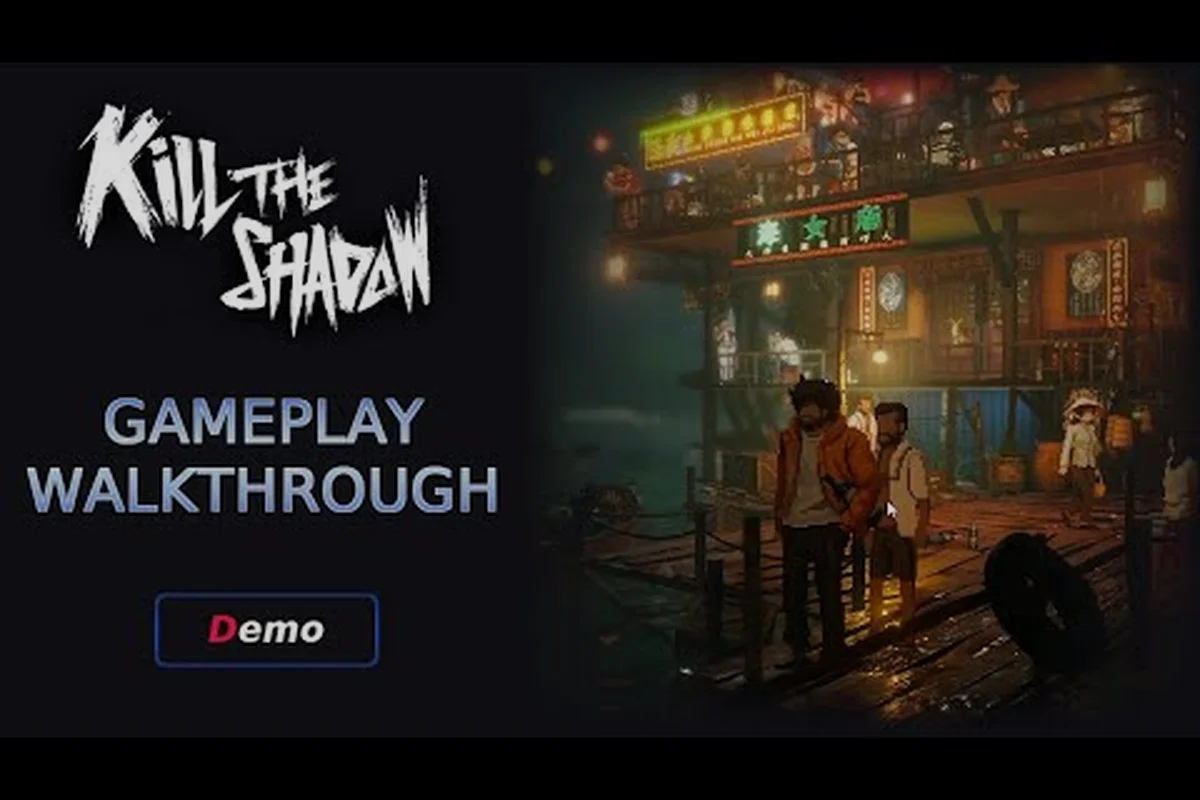
The strongest Kill The Shadow runs share one trait: players treat every scene as a layered puzzle rather than a linear script. According to the official Steam listing, this 2.5D pixel-noir detective RPG hands you a Shadow companion that can rewind time, a corkboard for connecting clues, and three competing ability paths that reshape every conversation. This walkthrough distills the best strategies for making those systems work together so you can solve cases faster, unlock hidden branches, and reach the ending you actually want.
Understanding the Core Mechanics
Before chasing any Kill The Shadow best strategies, you need a working mental model of the four systems that drive every encounter: Time Rewind, the Corkboard Deduction board, turn-based combat, and the three ability paths (Spirit, Strength, Charm). Each one feeds the others, which is why a pure combat build or a pure dialogue build tends to stall around mid-case. Developer commentary recorded in the GamingBolt interview confirms that the game is tuned around players who mix tools rather than specialize.
Three mechanical pillars define your moment-to-moment decisions:
-
Investigation loops cycle through "talk, search, rewind, deduce," rewarding players who revisit rooms after every breakthrough.
-
Resource tension comes from a limited Rewind Charge meter, not from a failing health bar, so every reversal is a deliberate trade.
-
Branching dialogue is gated by ability checks, not charisma stats, meaning your build choice is also your story choice.
The community tier analysis at nevermoreniche confirms that Spirit unlocks the broadest selection of dialogue branches, while Strength shines in tighter corridors and Charm quietly opens unique NPC exchanges. For a deeper primer on how these first hours unfold, the Kill The Shadow beginner guide walks through the opening case step by step.
Choosing Your Ability Path
A Kill The Shadow walkthrough is incomplete without picking a path early, because the first major choice usually locks which Act 2 investigations you can fully access. The game presents three branches during the Soul Trial sequence, and each one trades breadth for depth.
Spirit Build Versatility
The Spirit path is the community-recommended default for first-time players because it adds dialogue persuasion, ghost-sight vision, and a passive that reveals hidden evidence on the corkboard. With Spirit, you can often resolve a tense standoff without spending a single combat round, which preserves your Rewind Charges for the case finale. The trade-off is moderate damage output, so enemies that force a fight will take longer to drop.
Strength Build Dominance
Strength is the blunt instrument path. It boosts melee damage, unlocks environmental smash interactions, and lets you break locked doors during exploration. Cases that lean heavily on physical obstruction—warehouse raids, subway tunnels, basement chases—clear noticeably faster on a Strength build, but you will meet dialogue walls that Spirit would simply walk past.
Charm Build Subtlety
Charm is the wildcard. It unlocks unique NPC interactions, lets you defuse social traps, and opens a small but influential set of late-game dialogue options that no other path can access. Solo Charm runs are the hardest, but combining one or two Charm nodes with a Spirit core is widely considered one of the best strategies for maximizing endings.
| Path | Combat Power | Dialogue Access | Puzzle Speed | Best For |
|---|---|---|---|---|
| Spirit | Medium | Very High | Fast | First playthrough, all endings |
| Strength | Very High | Low | Medium | Action-heavy chapters |
| Charm | Low | High (unique) | Slow | Replay, NPC questlines |
If you want a more guided setup before locking in your path, the how to start in Kill The Shadow guide breaks down the pre-trial choices that influence which path rewards you most.
Mastering the Time Rewind System
Time Rewind is the single most powerful tool in the game, and using it well is the difference between a clean case and a frustrating loop. The system reverses the last few seconds of action, restoring HP, Rewind Charges, and positional states. It does not undo NPC suspicion, so carelessly rewinding a botched dialogue can leave you with a hostile witness and no charge left to try again.
Smart Rewind Timing
The best strategies revolve around rewinding before a failure, not after. When you sense a choice is risky, commit to it once for information, then rewind immediately if the outcome is bad. This burns a single charge but keeps the NPC's mood neutral, which matters more than the raw dialogue bonus you may have sacrificed.
Charge Management
Charge capacity grows with story progress, but the base pool is small. Treat each charge like a save scum in a survival game: spend it only when the alternative is a 10-minute reload. Below is a practical management table drawn from community testing.
| Scenario | Should You Rewind? | Reasoning |
|---|---|---|
| Missed a hidden clue | Yes | Clues are gated, not regenerable |
| Lost a combat round | Usually no | HP is recoverable, charges are not |
| Wrong dialogue branch | Sometimes | Only if the NPC becomes hostile |
| Botched corkboard link | Yes | Deductions are the core puzzle |
Pairing Time Rewind with the corkboard converts the game into a forgiving investigation sim, which is why most replay guides recommend it as a beginner crutch that never truly goes out of style.
Corkboard Deduction Walkthrough
The corkboard is where most Kill The Shadow players stumble, because it looks like a freeform connection tool but actually runs on a strict rule set. Each clue has a category tag (Person, Object, Location, Time, Motive), and only same-category links count toward a deduction. Stringing two Person clues together does nothing; you need a Person → Location → Time chain to crack a case.
Building Evidence Chains
Successful Kill The Shadow walkthrough routes always build three independent chains before attempting a final conclusion. The first chain establishes the victim's last movements, the second identifies the suspect's alibi, and the third ties motive to opportunity. If any chain stalls, the case simply will not close, no matter how many side clues you have collected.
Common Deduction Patterns
Pinning a clue sets it on the board. Linking two pinned clues creates a thread. Three connected threads in different categories unlock a synthesis prompt, which is the corkboard's way of asking you to name the culprit. Learning this rhythm is one of the best strategies for shaving hours off your investigation time.
| Step | Action | Result |
|---|---|---|
| 1 | Pin 8-12 clues across categories | Board becomes legible |
| 2 | Link same-category clues | Threads appear |
| 3 | Cross one thread to another | Synthesis unlocks |
| 4 | Submit synthesis | Case resolves or branch opens |
For a deeper dive into clue hunting routes, the Kill The Shadow investigation guide maps every major case's corkboard layout and the clues you should pin first.
Combat, Dialogue, and Late-Game Tactics
Even on a Spirit-heavy build, several chapters force you into turn-based combat where positioning and ability timing matter more than raw damage. Enemies telegraph their strongest attacks two turns out, so the best strategies always include a defensive buff on the turn before the telegraphed strike, not the turn of.
Combat Fundamentals
-
Buff before big hits — apply Spirit Shield or Adrenaline on the round preceding an enemy ultimate.
-
Focus fire threats — crowd control expires; burning one elite down is faster than spreading damage.
-
Save the Shadow — the Shadow companion can absorb one lethal hit per encounter if you position correctly.
Dialogue Persuasion
Most persuasion checks have a soft floor based on your ability points and a hidden floor based on prior NPC interactions. Talking to a witness before attempting a hard persuade doubles your success rate, which is why walkthroughs recommend exhausting every optional dialogue option first. The interrogation techniques guide covers the exact order to press, flatter, and retreat for each major NPC archetype.
Reaching the Best Ending
Branching culminates in a final synthesis that blends combat score, corkboard accuracy, and a hidden Trust stat accumulated across cases. Players who explored both Spirit and Charm paths, kept NPCs alive, and submitted clean corkboard syntheses consistently unlock the best ending route. If you want a spoiler-light roadmap to that finale, the Kill The Shadow best ending guide outlines the three flags you must raise before the final act.
Advanced Play Order
Once you have a clean first run, the optimal second-run strategy is a Spirit-Charm hybrid that skips the Strength tree entirely. This build opens every dialogue branch, hits the soft floor for every persuasion check, and still clears combat through buff stacking. Replay value is high because flags persist across saves only if you explicitly carry them, so most players keep one "completionist" save and one "experiment" save side by side.
| Run Order | Primary Path | Secondary Nodes | Goal |
|---|---|---|---|
| First | Spirit | None | Learn mechanics, see base story |
| Second | Spirit | Two Charm | Unlock unique NPC content |
| Third | Strength | Skip dialogue | Speedrun combat chapters |
Best Strategies FAQ
What is the strongest ability path for a first playthrough in Kill The Shadow?
The Spirit path is the strongest choice for a first run because it unlocks the widest dialogue range, reveals hidden corkboard clues, and still handles combat via buff stacking. Most community guides, including the tier ranking at nevermoreniche, rank it above Strength for new investigators.
How does Time Rewind actually work in Kill The Shadow?
Time Rewind reverses the last few seconds of action, restoring your HP, position, and a single Rewind Charge from the pool you started that sequence with. It does not reset NPC hostility or suspicion, so the best strategies use it to recover from missed clues rather than failed dialogue.
Can I respec my ability points mid-campaign?
There is no full respec NPC, but the Soul Trial at the end of Act 2 lets you redistribute up to four points for a small in-game currency cost. Plan your first four picks carefully, since missing the cap before the trial locks you into your early path for the rest of the case.
Which clues should I pin first on the corkboard?
Always pin Person and Time clues first, because they sit at the head of the longest deduction chains. Pinning Object clues too early creates dead threads that consume board space and confuse the synthesis prompt, which is one of the most common mistakes new players make in any Kill The Shadow walkthrough.
Does the build choice affect which ending I get?
Yes. Your path determines which Act 3 dialogue options are available, which in turn raises or lowers the hidden Trust flags that gate the best ending. A pure Strength run can still reach a good ending, but only the Spirit-Charm hybrid reliably unlocks the highest-trust finale.
Which path are you leaning toward for your first case, and which ending are you chasing? Drop your build in the comments so other investigators can compare notes, and share this guide with a partner who keeps failing the corkboard synthesis on the third chain.