
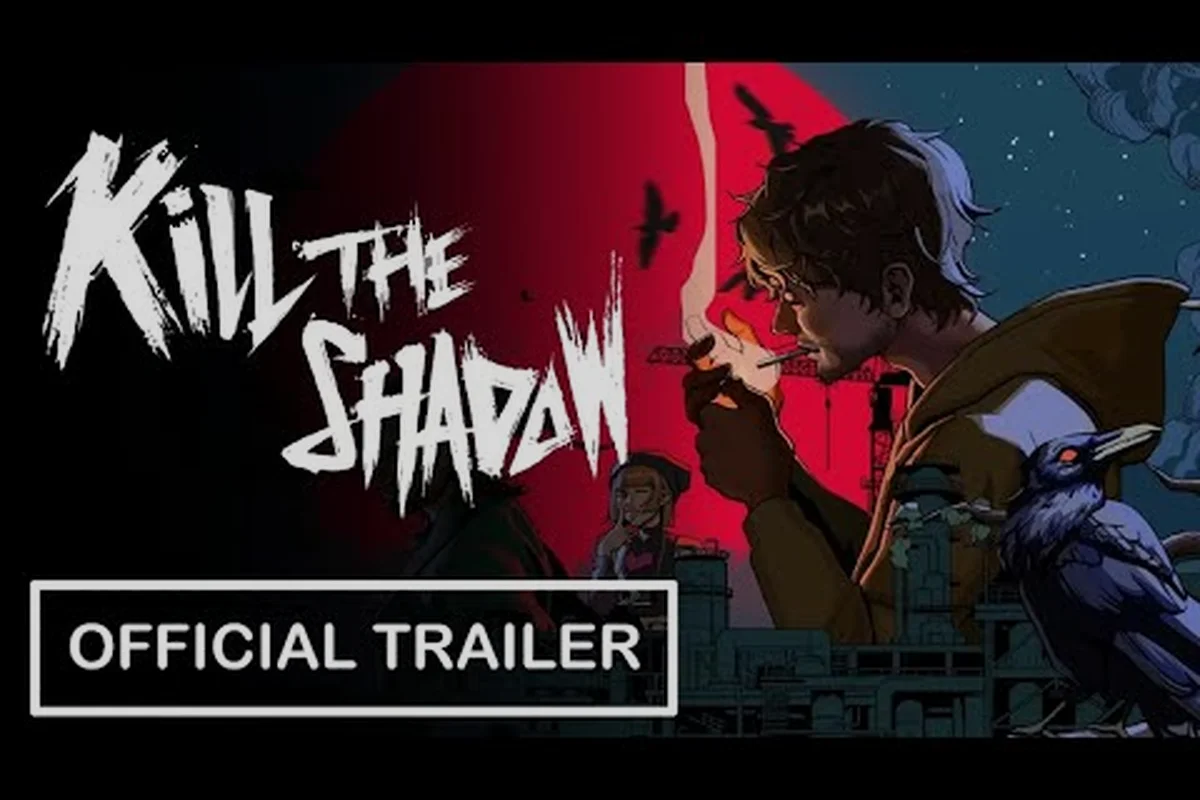
The Story Behind Kill The Shadow
Kill The Shadow is a 2.5D pixel-noir detective RPG developed by Shadowlight, set in the rain-soaked, post-war metropolis of Dark Tide City. Released as a love letter to classic detective fiction and gothic horror, the game blends a brooding narrative with unique investigative mechanics like corkboard deduction and time rewind. Players take on the role of Lucas, a former police officer turned reluctant paranormal investigator, who is forced to partner with a mysterious entity known as The Shadow to solve a series of gruesome crimes tied to a far-reaching conspiracy.
What makes Kill The Shadow stand out in the crowded detective RPG genre is its fusion of human drama and supernatural mystery. Every corpse tells a story, and only The Shadow can read those final memories. As Lucas, you must piece together those spectral testimonies using physical evidence, witness interviews, and the time-bending powers that define the game's combat and exploration. For newcomers to the genre, our beginner guide provides an excellent foundation before diving into the dark corners of the city.
Dark Tide City: A World Divided
The story of Kill The Shadow unfolds in Dark Tide City, a fractured coastal metropolis that was once a thriving port but is now scarred by a devastating post-war division. Following the conflict, the city was split into distinct districts, each controlled by different factions, military occupiers, and underworld syndicates. This fractured geography is more than just window dressing — it directly drives the central plot, as each district harbors its own secrets, victims, and conspirators.
The post-war setting creates a society where law is fragile and trust is a luxury nobody can afford. Military occupation patrols the streets of the upper districts, while the lower neighborhoods fall under the sway of criminal organizations and desperate survivors. Within this climate of fear, a chain of brutal murders begins, and the official police — including Lucas's former colleagues — are either unable or unwilling to investigate. It is here that The Shadow appears, binding itself to Lucas and offering him the means to uncover truths that the living are determined to keep buried.
The Pig Cage Walled City
One of the most iconic and haunting locations in the game is the Pig Cage Walled City, a labyrinthine slum built within the ruins of an old fortress. Once a thriving immigrant quarter, it has now become a lawless district ruled by gang lords and forgotten by the military government. Many of the early-game cases take Lucas deep into the alleyways of the Pig Cage Walled City, where The Shadow's presence grows stronger amid the squalor.
Shipwreck Wharf District
In contrast, the Shipwreck Wharf district is where the city's maritime history still bleeds into its present. Abandoned freighters, half-sunken cargo ships, and rusted cranes form the backdrop for some of the most pivotal story encounters. Shipwreck Wharf is a transit point for smugglers, refugees, and ex-policemen who have fled their pasts. Several of the game's revelations concerning Lucas's missing fiancée pass through this district, making it a recurring location throughout the campaign.
Lucas: A Detective Driven by Loss
At the heart of Kill The Shadow is Lucas, a former police officer whose life was shattered by the same war that fractured Dark Tide City. Before the conflict, Lucas was engaged to be married, but his fiancée disappeared during the chaos of the military occupation. Haunted by guilt and unanswered questions, Lucas left the force and became a private investigator — though his true goal has always been to uncover what really happened to the woman he loved.
Lucas is not a typical hero. He is flawed, exhausted, and frequently on the edge of giving up. The partnership with The Shadow is therefore not entirely voluntary; the entity chose Lucas for reasons that are not revealed until late in the story. Together, they form a duo that balances human intuition with supernatural perception. Throughout the game, players make choices that shape Lucas's personality and the affinity he builds with Captain Wang, Kiki, and Teddy — three supporting characters whose trust Lucas must earn if he hopes to reach the truth.
Strength, Spirit, and Charm Builds
While the game does not use a traditional class system, Lucas's interactions are influenced by a hidden three-path build mechanic tied to his personality. The choices you make during dialogues and investigations push Lucas toward one of three archetypes:
| Build Path | Playstyle | Story Impact |
|---|---|---|
| Strength | Direct, confrontational approach | Lucas intimidates suspects and forces confessions |
| Spirit | Introspective, mystical-leaning | Lucas attunes deeper to The Shadow and unlocks more memories |
| Charm | Diplomatic, empathetic | Lucas builds alliances and earns confidant revelations |
These builds are not mutually exclusive — you can blend them — but they heavily influence which corkboard deduction branches you can complete and which character-specific scenes you unlock. For a deeper look at how to start optimizing your build, see our how to start guide.
The Shadow: Reading the Dead
The Shadow is the supernatural entity bound to Lucas and serves as the game's most distinctive narrative device. Where traditional detective stories rely on forensic science and witness testimony, Kill The Shadow adds a paranormal layer: The Shadow can touch the recently deceased and read their final memories. These memories manifest as ghostly vignettes that players witness firsthand, providing clues that no living witness could offer.
The Shadow is not merely a tool, however. The entity has its own motivations, and its relationship with Lucas evolves over the course of the plot. As Lucas dives deeper into cases, he begins to realize that The Shadow may have its own agenda — one tied to the conspiracy that links every murder, every cover-up, and every missing person in Dark Tide City. Late-game revelations cast doubt on whether The Shadow is truly Lucas's ally, or whether it has been using him all along to settle an ancient score.
Main Plot Cases and Story Beats
The campaign of Kill The Shadow is structured around a series of interlocking cases, each of which reveals another layer of the larger conspiracy. Below is a breakdown of the major narrative beats and the locations where they unfold.
| Case Chapter | Location | Central Mystery |
|---|---|---|
| Chapter 1 — The Drowned Witness | Shipwreck Wharf | A body pulled from the harbor holds memories of a military cover-up |
| Chapter 2 — The Walled City Butcher | Pig Cage Walled City | A serial killer is performing ritualistic murders tied to wartime trauma |
| Chapter 3 — The Captain's Secret | Police HQ / Docks | Captain Wang approaches Lucas with classified information |
| Chapter 4 — Kiki's Missing Brother | Market District | A young informant vanishes after discovering too much |
| Chapter 5 — Teddy's Last Job | Industrial Zone | A fixer confesses before dying, leaving a trail of breadcrumbs |
| Chapter 6 — The Shadow's Origin | Forgotten Temple | Lucas and The Shadow finally confront their shared past |
| Chapter 7 — The City Burns | Dark Tide City (All Districts) | The conspiracy comes to a head in a multi-district climax |
The First Case: Setting the Tone
The opening chapter introduces players to both the core mechanics and the bleak tone of the game. Lucas is called to Shipwreck Wharf to investigate the death of a dockworker whose body has washed ashore with no obvious wounds. It is here that Lucas first meets The Shadow, and the player first learns the corkboard deduction system — placing evidence, witness statements, and ghostly memories on a virtual board to identify logical connections.
Mid-Game Revelations
Around the halfway point, the previously separate cases begin to converge. The victims Lucas has been investigating all share a connection to a covert military program that operated during the war. Captain Wang, Lucas's former superior, becomes a central figure as he is forced to choose between his loyalty to the new regime and his conscience. Meanwhile, Kiki, a young street informant, provides Lucas with underground contacts, while Teddy, a weary fixer, offers pragmatic assistance — for a price.
The Final Truth
The endgame of Kill The Shadow is where the time rewind mechanic becomes most thematically relevant. Lucas discovers that the conspiracy is not simply political — it is metaphysical. The Shadow's true purpose is to expose a crime committed at the moment of the city's division, a crime so terrible that reality itself fractured around it. Players must use time rewind to revisit key scenes, correct mistakes, and ultimately decide whether to expose the truth at the cost of everything, or bury it forever to protect what remains of Dark Tide City.
Main Characters Driving the Plot Forward
The supporting cast of Kill The Shadow is small but deeply written. Each character reflects a different facet of the city's broken society, and each holds a piece of the central mystery.
| Character | Role | Connection to Lucas | Story Significance |
|---|---|---|---|
| Captain Wang | Former police superior, now a compromised official | Mentor figure with hidden loyalty | Holds military secrets critical to the conspiracy |
| Kiki | Young street informant in the Pig Cage Walled City | Reluctant ally | Her brother disappears after discovering evidence |
| Teddy | Weary fixer operating out of Shipwreck Wharf | Old friend from Lucas's police days | Provides access to the criminal underworld |
| The Shadow | Spectral entity bound to Lucas | Inseparable partner | Revealed to have a personal stake in the central mystery |
| Lucas | Protagonist, former police officer, grieving fiancé | — | Player character whose choices shape the ending |
The Conspiracy Revealed
The central conspiracy of Kill The Shadow ties together every district, every victim, and every character in a web of post-war betrayal. According to the in-game lore referenced by outlets like GamingBolt's story deep dive, the city's fracture was not merely the result of military conflict — it was engineered by a faction within the occupying army that sought to weaponize the trauma of the population. The murders Lucas investigates are not random; they are the surface symptoms of a much older crime.
What makes the conspiracy effective from a storytelling perspective is how it scales. The early cases feel like discrete mysteries, but as the corkboard deduction board fills with strings of red yarn connecting different threads, players begin to see the larger picture. The game rewards careful investigators with additional dialogue options, hidden flashbacks, and alternate endings that respond to how thoroughly the player has connected the dots.
Gameplay Mechanics That Shape the Story
The narrative of Kill The Shadow is not told through cutscenes alone. Several gameplay mechanics are directly tied to story progression, and mastering them is essential for unlocking the full plot.
| Mechanic | Function | Story Role |
|---|---|---|
| Corkboard Deduction | Arrange evidence and testimony to deduce case solutions | Reveals hidden connections and unlocks unique dialogue |
| Time Rewind | Reverse combat or environmental actions to correct mistakes | Allows revisiting past scenes with new knowledge |
| Shadow Vision | Trigger The Shadow's memory-reading ability | Unlocks ghostly flashbacks that only Lucas can witness |
| Affinity System | Build trust with Wang, Kiki, and Teddy | Unlocks exclusive scenes and alters the final act |
| Build Paths | Strength, Spirit, or Charm responses | Determines which deductions and confrontations are available |
For players looking to maximize their investigative efficiency, our tips and tricks guide covers advanced techniques for using time rewind in combat, optimizing your corkboard layout, and reading The Shadow's emotional cues during memory sequences.
How the Story Ends
The ending of Kill The Shadow is determined by the player's accumulated choices across all seven cases. There are three primary conclusions, each shaped by Lucas's dominant build path and the affinity levels he maintained with Captain Wang, Kiki, and Teddy. A Strength-aligned Lucas tends toward direct confrontation, often resulting in a violent but cathartic resolution. A Spirit-aligned Lucas is more likely to find a peaceful but sorrowful conclusion through communion with The Shadow. A Charm-aligned Lucas typically brokers a fragile political solution that saves the city but leaves personal questions unanswered.
Regardless of which ending you pursue, the emotional core remains the same: Lucas's grief over his missing fiancée is finally resolved, either through reunion, revelation, or tragic acceptance. The Shadow's true nature is also revealed, providing closure to the metaphysical thread that has run beneath every investigation.
Plot Summary FAQ
What is the main plot of Kill The Shadow?
Kill The Shadow follows Lucas, a former police officer in the post-war city of Dark Tide City, who partners with a supernatural entity called The Shadow to investigate a series of murders connected to a citywide conspiracy, all while searching for his missing fiancée. The narrative blends detective work with metaphysical horror.
Who is The Shadow in Kill The Shadow?
The Shadow is a spectral entity that can read the final memories of the recently deceased, providing Lucas with supernatural clues during investigations. Its true identity and motives are gradually revealed through late-game corkboard deduction sequences and personal flashback scenes.
Where does the story of Kill The Shadow take place?
The story is set in Dark Tide City, a post-war metropolis split into several districts. Key locations include the lawless Pig Cage Walled City, the maritime Shipwreck Wharf, the Military-occupied upper districts, and the Forgotten Temple where the final revelations unfold.
Do choices in Kill The Shadow affect the story?
Yes, dialogue choices, investigation paths, and affinity with characters like Captain Wang, Kiki, and Teddy all influence the available deductions, the unlocked ending, and the fate of the supporting cast. The Strength, Spirit, and Charm build paths also shape how Lucas approaches each case.
Is Kill The Shadow's story connected to its gameplay mechanics?
Absolutely. The corkboard deduction system directly drives the investigation forward, while the time rewind mechanic becomes a narrative device in the late-game chapters, allowing Lucas to revisit past events and alter the outcome of the central conspiracy.