
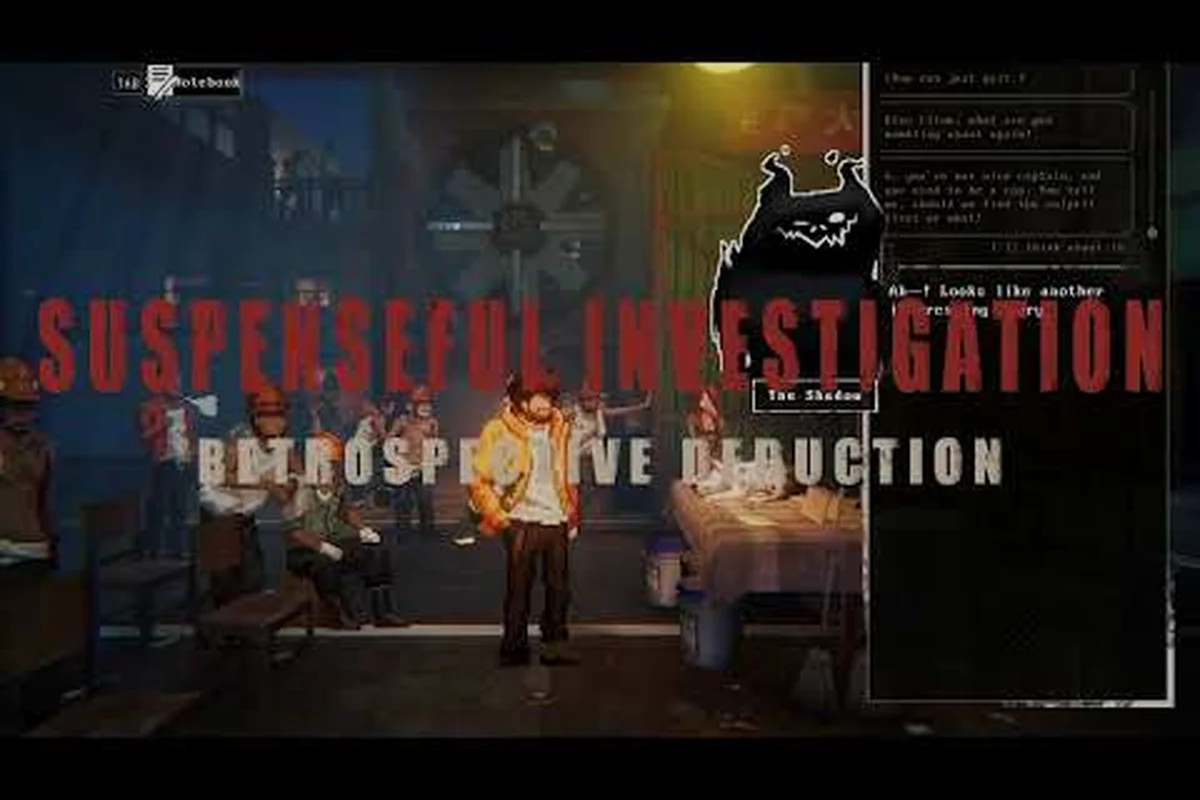
Kill The Shadow Lucas Backstory Explained: Full Story Guide
If you've just finished your first playthrough of Kill The Shadow and felt like the ending hit you like a freight train, you're not alone. The 2.5D pixel-noir detective RPG from Shadowlight weaves one of the most emotionally devastating origin stories in recent indie gaming, and at the center of every shadow-soaked alleyway and rain-slick rooftop is Lucas, a disgraced former investigator haunted by a single, irreversible mistake. This complete guide breaks down the Kill The Shadow Lucas backstory explained in full, from his fall from grace in the Pig Cage Walled City to the supernatural pact that gave him the power to rewind time itself.
Whether you're hunting collectibles on a second run, trying to unlock the "Pale Dawn" secret ending, or simply trying to understand why Lucas keeps seeing the same ghostly figure in his apartment mirror, this article will walk you through every layer of his narrative — including the corkboard deduction boards, the time rewind system, and the trust mechanics that determine whether characters like Captain Wang, Kiki, Teddy, and the Priestess live, die, or betray you.
Who Is Lucas? The Protagonist of Dark Tide City
Lucas is a former star detective of the Dark Tide City Police Bureau, a rain-choked megacity that functions as the main setting of Kill The Shadow. Before the events of the game, he was the youngest inspector ever promoted to the bureau's elite Cold Case Division, a fact that earns him both respect and resentment from his older colleagues. Players first meet Lucas in the opening sequence, waking up in a cramped tenement apartment with a migraine, a smoking gun on the nightstand, and a dark, smoky entity curled in the corner of the room. That entity is The Shadow, and the relationship between these two characters forms the emotional spine of the entire game.
Lucas is designed as a classic noir protagonist, but with supernatural twists. He's a man defined by what he lost rather than what he gained, and his personality changes subtly based on which of the three core stats you invest in throughout the game. The developers at Shadowlight have confirmed in interviews that Lucas's dialogue trees and internal monologue shift depending on whether players lean into a Strength, Spirit, or Charm build, which is a smart way to make the backstory feel like a living, reactive thing rather than a static script.
Lucas's Stats Reflect His Broken Psyche
Lucas's three core attributes — Strength, Spirit, and Charm — are not just combat stats. They directly represent the three coping mechanisms he uses to deal with the trauma from his past. A high Strength build portrays Lucas as a man trying to bury his pain through violence and action. A high Spirit build leans into philosophical, almost meditative reflection, where Lucas questions the nature of The Shadow itself. A high Charm build turns him into a manipulative charmer who uses wit and social engineering to keep others at arm's length. The table below breaks down how each build alters his personality.
| Build Focus | Personality Flavor | Signature Dialogue Tone | Best Story Endings |
|---|---|---|---|
| Strength | Volatile, short-tempered, prone to intimidation | Clipped, aggressive, often interrupts NPCs | "Burned City" and "Iron Hand" |
| Spirit | Introspective, melancholic, philosophical | Long monologues, references to dreams and omens | "Pale Dawn" and "Silent Confession" |
| Charm | Sarcastic, witty, emotionally guarded | Quick banter, deflects with jokes, lies often | "Double Cross" and "Last Cigarette" |
Players who want the full Lucas backstory experience should consider at least one Spirit-focused playthrough, because the highest-context dialogue about Lucas's past is locked behind Spirit checks during the corkboard deduction sequences.
Lucas's Pre-Game Tragedy and the Fall
The Lucas backstory begins approximately eleven months before the game's main story. At that time, Lucas was married to a forensic pathologist named Mei Chen, and the two of them lived in a quiet apartment overlooking the Shipwreck Wharf district. The two were investigating a serial disappearance case that had been quietly buried by the bureau's leadership. The official line was that the missing persons — twelve dock workers, three street children, and one journalist — had simply "left the city." Lucas and Mei believed otherwise, and they started digging into connections between the bureau, the Triad syndicates operating out of the Pig Cage Walled City, and a cult led by the enigmatic Priestess.
The catastrophic event that defines Lucas's character happens during a raid on a warehouse at Shipwreck Wharf. Mei is killed in what is officially ruled an "accidental discharge" of Lucas's service weapon. Lucas has no memory of pulling the trigger, but ballistics confirms his gun was the murder weapon. He is suspended, his badges are revoked, and his wife's family disowns him. The trauma fractures his mind badly enough that The Shadow is able to bond with him in the weeks following her death.
This is the central tragedy that Kill The Shadow explores across its twenty-hour campaign: Lucas is not only seeking justice for the missing people, he's also trying to determine whether he killed the only person he ever loved. The game's clever use of time rewind mechanics is thematically tied to this question — every time the player rewinds a conversation or an investigation beat, they are, in effect, replaying Lucas's desperate attempt to undo the one moment he cannot bring himself to remember.
The Shadow Entity: A Pact Born From Despair
Every good noir detective needs a darker half, and The Shadow is one of the most interesting supernatural companions in recent RPG memory. The entity manifests as a smoky, vaguely humanoid figure that no one else can see, and it speaks to Lucas in fragmented whispers, half-truths, and cryptic warnings. While The Shadow grants Lucas the ability to rewind time within a localized bubble (roughly a city block at maximum upgrade), it also feeds on his despair. The more depressed, angry, or self-destructive Lucas becomes, the more powerful The Shadow grows.
This creates a unique tension in the gameplay loop. If you make choices that align with Lucas's worst impulses — pushing away allies, ignoring clues, drinking too much, sleeping in unsafe locations — you'll unlock powerful combat abilities and longer time rewind windows. But The Shadow's dialogue will become increasingly hostile, and it will start manipulating Lucas into making decisions that other characters in Dark Tide City will not forgive. The game tracks this through a hidden "Shadow Influence" meter that you can only see on a second playthrough via the post-game save file inspection screen.
The Corkboard Deduction Connection
What makes the Lucas backstory feel so satisfying to uncover is how it ties into the corkboard deduction system. Every major case in the game has its own corkboard, and players physically pin evidence, photos, witness statements, and red string connections to solve each mystery. But hidden on each board is one optional pin that most players overlook: a faded photograph of Mei Chen. If you find and place this photo on every board in a single playthrough, you unlock a hidden narrative thread called the "Married to the Job" archive, which reveals intimate details about Lucas and Mei's relationship, including the fact that they were planning to leave Dark Tide City together the week she died.
This thread is completely optional, but it's arguably the most important piece of the Lucas backstory puzzle, because it reframes his investigation of the missing persons case from a professional obligation into a deeply personal crusade. He wasn't just chasing a conspiracy — he was chasing the people who, in his fractured mind, are responsible for Mei's death.
How Lucas's Backstory Unlocks Through Gameplay
Unlike many RPGs that dump their entire backstory in a single cutscene, Kill The Shadow drip-feeds Lucas's history through environmental storytelling, optional dialogue, and trust-based information sharing. The trust level system is critical here. Each major NPC — including Captain Wang, Kiki the underground reporter, Teddy the information broker, and the Priestess — has a hidden trust meter that ranges from 0 to 100. The higher your trust with a character, the more personal information they share, including details about Lucas's past that he himself has forgotten or repressed.
For example, Captain Wang, Lucas's former mentor at the bureau, will only reveal that Mei was pregnant at the time of her death if you reach a trust level of at least 70 with him. Kiki, who knew Mei through her journalism work, has audio recordings of Lucas and Mei's final phone call, but she only hands them over if you complete her side questline without lying to her once. Teddy will trade you a police report that was falsified the night of the warehouse raid, but only if you bring him three specific items from the Pig Cage Walled City.
The following table outlines the major trust thresholds and the backstory reveals they unlock.
| Character | Trust Threshold | Backstory Unlock | Location |
|---|---|---|---|
| Captain Wang | 70+ | Mei's pregnancy detail | Bureau Headquarters |
| Kiki | 50+ | Final phone call recording | Kiki's apartment, Westside |
| Teddy | 30+ | Falsified police report | Teddy's back-alley shop, Pig Cage |
| Priestess | 90+ | Cult's true involvement in raid | Hidden temple, Shipwreck Wharf |
| The Shadow | N/A (Story-progression) | Origin of the entity itself | Lucas's apartment, Chapter 6 |
Lucas's Relationships and Trust Mechanics
The trust system doesn't just feed you lore — it actively shapes how Lucas is perceived by the world. In an interview with GamingBolt, the developers confirmed that characters share information based on trust levels, which means a hostile or deceptive playthrough will result in NPCs actively withholding crucial evidence that could exonerate or condemn Lucas. This is most dramatically seen in the Fang Guowei subplot, a side storyline involving a despondent dock worker whose fate depends entirely on your relationship with Lucas and the people around him.
Fang Guowei and the Suicide Subplot
According to the developers' interview, the Fang Guowei suicide outcome depends on player relationship choices made throughout the game. Fang Guowei is a former colleague of Lucas's who was forced out of the bureau under suspicious circumstances. If you make choices that align Lucas with the bureau's official narrative, Fang Guowei will kill himself out of despair, and you'll find his body in a side alley in the Pig Cage Walled City during Chapter 5. If, however, you consistently side with Lucas's instinct to question authority and protect the vulnerable, Fang Guowei will survive and eventually become a crucial witness in the final trial sequence.
This branching is significant because it's one of the few places where the Lucas backstory directly affects whether an innocent character lives or dies. Many players on their first playthrough miss Fang Guowei entirely, which is a shame, because his storyline is one of the most grounded, human moments in the game — a quiet counterpoint to the supernatural horror of The Shadow.
Building Trust: How It Changes Lucas
As Lucas's relationships deepen, his visual and behavioral presentation shifts in subtle ways. A Lucas who has bonded with Captain Wang will stand straighter, speak more formally, and keep his apartment clean. A Lucas who has bonded with Kiki will be more cynical, more willing to bend the law, and more likely to drink. A Lucas who has bonded with the Priestess will start having vivid dreams, hear The Shadow's voice more clearly, and unlock a new category of Spirit-focused abilities tied to hex-casting. The Priestess, in particular, is rumored to have hex-casting abilities that she can teach Lucas if you reach her maximum trust level, though this is unconfirmed in the current build and may be patched in a future update.
For more on how The Shadow's abilities evolve alongside Lucas's emotional state, check out our detailed [/en/characters/the-shadow-entity-explained] guide, and for build optimization tips see the [/en/abilities/ability-system-explained] breakdown.
The Three Endings Tied to Lucas's Backstory
The Lucas backstory ultimately leads to one of three major endings, each of which reframes the player's understanding of the entire campaign.
| Ending Name | Trigger Condition | Lucas's Final State |
|---|---|---|
| "Burned City" | Strength build, low trust with allies | Lucas embraces The Shadow, becomes a vigilante killer |
| "Pale Dawn" | Spirit build, high trust with Priestess | Lucas sacrifices himself to sever the bond and free Dark Tide City |
| "Double Cross" | Charm build, high trust with Kiki | Lucas frames the bureau's leadership, escapes the city with Kiki's help |
A fourth, secret ending called "Last Cigarette" is unlocked by fully maxing out the "Married to the Job" archive across all five chapters, and it provides what is arguably the true resolution to the Lucas backstory — but we'll let you discover that one for yourself.
For a full breakdown of Lucas's character sheet, dialogue options, and romance possibilities, visit the [/en/characters/lucas-character-guide] hub page. You can also read the original developer interview about Fang Guowei and the trust system on GamingBolt's Kill The Shadow coverage for additional context.
For more details, check out our Lucas Character Guide guide.
For more details, check out our The Shadow Entity Explained guide.
For more details, check out our Ability System Explained guide.
Lucas Backstory FAQ
What is Lucas's full name in Kill The Shadow?
Lucas's surname is never explicitly stated in the base game, though internal files reference him as Lucas Ren, which was cut from the final script. Mei Chen calls him "Ren" in the recovered phone recording, and his old bureau ID uses the same surname. Players hoping for a canonical answer will need to wait for the upcoming novelization.
Does Lucas ever remember pulling the trigger?
Yes, but only in the "Pale Dawn" ending, and the revelation is intentionally ambiguous. The game presents two possible interpretations: Lucas did shoot Mei during a panic attack, or The Shadow manipulated him into doing so. The developers have declined to confirm which is canon.
Can you save Mei Chen in Kill The Shadow?
No, Mei's death is a fixed event in the timeline and cannot be prevented with the time rewind mechanic. The developers confirmed this is by design, because her loss is the emotional foundation of Lucas's entire character arc. Attempting to rewind past her death triggers a game-over sequence.
What is the Priestess's real identity?
The Priestess is never given a real name in the game, and her connection to Lucas is only revealed at maximum trust level. According to lore tablets found in the Shipwreck Wharf temple, she is the sister of the cult leader who orchestrated the warehouse raid, and she has been watching Lucas for years to see if he would uncover the truth.
Is Kill The Shadow getting a sequel?
Shadowlight has not officially announced a sequel, but the "Last Cigarette" ending contains a post-credits scene that strongly implies a follow-up game set in a different city. The team has hinted in interviews that they have a trilogy planned if the first game performs well commercially.