
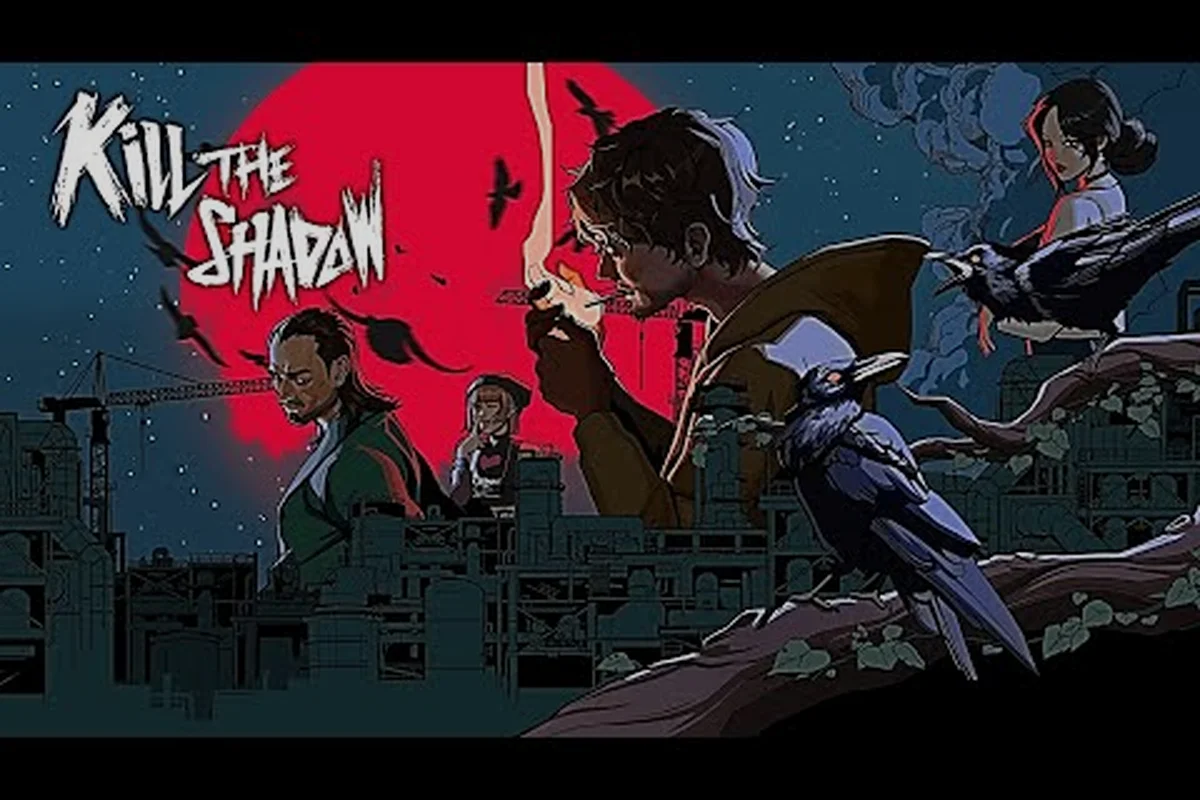
When Lucas first shakes the cold hand of The Shadow on a rain-slick pier in Shipwreck Wharf, most players instinctively pick the Strength path. They want to slam doors, intimidate suspects, and brute-force the truth out of Dark Tide City. The Spirit build is the opposite. It whispers. It bends. It plays mind games so subtle that by the end of a case you realize the confession was never given — it was gifted to you by someone who believed the lie was theirs.
This guide is a deep dive into the Kill The Shadow Spirit build mind games playstyle, covering ability tiers, dialogue unlocks, corkboard deduction synergies, and the underrated combo of psychic pressure with time rewind. If you want to play the smartest detective in the room — not the loudest one — this is your blueprint.
What Is the Spirit Build in Kill The Shadow?
The Spirit build is one of three ability paths confirmed in the game's tri-path system (alongside Strength and Charm). Each path represents a fundamentally different way Lucas solves cases, interacts with NPCs, and ultimately negotiates the bargain between himself and The Shadow.
According to the GamingBolt interview with Shadowlight, the three ability paths "open different investigation approaches and dialogue unlocks" — but Spirit is the path with the deepest psychological toolkit. Where Strength lets you smash evidence lockers and Charm lets you flirt your way past a bouncer, Spirit lets you read micro-expressions, plant false memories, and steer a suspect's internal monologue mid-sentence.
Spirit vs. Strength and Charm at a Glance
| Ability Path | Core Fantasy | Best Tool | Dialogue Style | Investigation Style |
|---|---|---|---|---|
| Spirit | Mind games and psychic reading | Telepathy & suggestion | Innuendo, double-meanings, probing questions | Clue-finding via emotion traces |
| Strength | Physical pressure and intimidation | Force and intimidation | Threats, ultimatums, raised voices | Breaking & entering, forced entry |
| Charm | Persuasion and social engineering | Empathy and rapport | Compliments, flattery, shared stories | Friendly interviews, bribery |
Why Mind Games Matter in Dark Tide City
Dark Tide City is not a friendly place. It is a port town drowning in its own secrets, with districts like the Pig Cage Walled City operating under their own laws. A Spirit-focused Lucas doesn't fight the city's corruption — he redirects it. The right whispered suggestion to Captain Wang can flip a police interrogation. The right planted doubt in Kiki's network can collapse an information broker's empire from the inside.
If you want a more general overview of the system's three paths before specializing, see our abilities overview of the best ability builds. For Spirit players specifically, our Spirit ability guide breaks down every unlock tier in detail.
Core Spirit Abilities and Mind Game Mechanics
The Spirit path is organized into three ability tiers, each unlocking a new layer of psychic interaction. By Tier 3, Lucas can essentially run a one-person misinformation campaign against an entire case's worth of suspects.
Tier 1 — Foundation of the Spirit Path
The first Spirit points you spend unlock the baseline mental toolkit:
-
Read Intent — Highlight an NPC's current emotional state during dialogue. Surfaces hidden "intent meters" that hint at whether they are lying, afraid, or about to betray you.
-
Echo Memory — Once per scene, replay the last three seconds of dialogue. Combined with time rewind, this is the cornerstone of every Spirit build trick.
-
Soft Voice — Unlocks Spirit-only dialogue options that whisper suggestions rather than ask direct questions. Targets almost never realize they have been steered.
Tier 2 — Intermediate Mind Techniques
Mid-tier Spirit abilities turn mind games from a passive read into an active weapon:
-
False Anchor — Plant a false memory of an object or event in a suspect's mind. They will reference it in later conversations, allowing you to catch contradictions in their corkboard deduction web.
-
Crowd Pulse — Read the mood of any group of NPCs in a district. Vital in the Pig Cage Walled City, where mob mentality shifts by the hour.
-
Borrowed Guilt — Redirect a target's guilt about one crime onto a lesser crime. Suspects confess to petty offenses to "clear their conscience," spilling information about the real case.
Tier 3 — Master Level Spirit Techniques
Tier 3 is where Spirit players feel like supervillains:
-
Confession Cascade — Chain suggestions across multiple NPCs so that one suspect's planted lie feeds into another's anxiety, eventually cracking the whole network.
-
Shadow Link — Direct communion with The Shadow, granting you a private conversation mid-interrogation. The Shadow can whisper the exact lie a target is about to tell.
-
Memory Surgery — The most powerful Spirit ability. Edit a single detail of a target's memory of a crime. Use sparingly: it leaves psychic residue that Captain Wang can detect on a Spirit-sensitive playthrough.
Corkboard Deduction Synergy with Spirit Mind Games
The corkboard deduction system in Kill The Shadow is already the brain of the game — a physical, pin-and-string board where you connect clues, suspects, and locations. The Spirit path transforms this system because Spirit-specific clues are invisible to other builds.
A Strength player sees a bloody glove. A Charm player sees a friendly witness. A Spirit player sees the glove, the witness, and the invisible thread of fear connecting them.
How Spirit Clues Reveal Hidden Connections
When you place a Spirit-flagged clue on the corkboard, the system reveals new connection types:
| Clue Type | Source | Corkboard Effect | Mind Game Use |
|---|---|---|---|
| Emotion Trace | Read Intent on NPC | Shows fear/anger/love lines to other suspects | Identify who the suspect is protecting |
| Echo Fragment | Echo Memory activation | Unlocks "?" pins that fill in after time rewind | Prove timeline lies |
| Borrowed Sin | Borrowed Guilt success | Adds confession threads to a softer crime | Bait suspects into bigger reveals |
| Shadow Whisper | Shadow Link use | Draws a red thread only Lucas can see | Pinpoint the mastermind |
The trick is to always run a Spirit-heavy corkboard alongside time rewind. A wrong pin can be rewound in seconds, and the Echo Fragment from that earlier attempt will often reveal where your deduction went sideways.
Best Spirit Mind Game Tactics for Major Cases
Every major case in Dark Tide City has at least one Spirit-critical suspect. Below are field-tested tactics from the most successful Spirit playthroughs.
Captain Wang Interrogation Tactics
Captain Wang runs the harbor police precinct out of Shipwreck Wharf and is one of the few NPCs who is Spirit-aware. That makes him simultaneously the hardest and most rewarding target.
The winning Spirit strategy is False Anchor → Soft Voice → Confession Cascade:
-
Use False Anchor to plant the memory that Wang already told you about a hidden cargo manifest.
-
Open the next conversation with a Soft Voice dialogue option that gently asks why he "kept the manifest from his own officers."
-
Wang's internal panic will do the rest. He will over-explain, contradict his own reports, and open up the entire smuggling ring on the corkboard.
Never lead with intimidation against Wang on a Spirit run. He is trained to resist it, and the game flags that behavior, reducing your Spirit XP gain.
Kiki Network Manipulation Strategies
Kiki runs the gossip network that stretches from the Pig Cage Walled City alleys to the uptown parlors. A Charm build befriends her; a Strength build threatens her; a Spirit build outplays her.
Use Crowd Pulse to read the mood of her lieutenants, then identify the one with the lowest morale. Hit that lieutenant with Borrowed Guilt during a side conversation, and within two in-game hours, the rumor mill will deliver Kiki's deepest secrets to your corkboard without you ever confronting her directly.
Teddy the Informant Mind Tricks
Teddy is the small-time stool pigeon you meet in Act 2. He looks like a pushover, but he is the linchpin of the Pig Cage Walled City's intelligence web. A Spirit-focused Lucas should treat Teddy as a calibration tool — every new Spirit ability you unlock, test it on Teddy first.
He is low-stakes, he talks too much, and his confessions are gold for building early-game corkboard web. A well-played Teddy interview in Act 2 will give you three or four connection lines into cases that don't formally start until Act 4.
Spirit Build Dialogue Options and Unlock Trees
Each Spirit ability unlocks a unique dialogue branch in conversation trees. These branches are color-coded green in the game's UI and are gated by both Lucas's Spirit level and the specific ability unlocked. You cannot simply grind Spirit XP — you need the right unlock at the right moment.
| Dialogue Branch | Unlocked By | Best Used On | Risk |
|---|---|---|---|
| Inner Voice | Read Intent | Any NPC | None — pure information |
| Whispered Doubt | Soft Voice | Nervous NPCs | Can backfire on confident targets |
| Plant & Pull | False Anchor | Recurring NPCs | Memory residue is detectable |
| Confession Trigger | Confession Cascade | Group interrogations | Can cause witness collapse |
| Shadow Pact | Shadow Link | Boss-tier NPCs | The Shadow may demand payment |
Notice the last row: every Shadow Link use is a transaction with The Shadow. The cost varies. On one playthrough it may be a memory of Lucas's childhood. On another, it may be a future dialogue option you will never get back. Spirit players must decide, case by case, how much they are willing to bargain.
Combining Spirit with Time Rewind for Maximum Effect
Time rewind is the universal investigative tool in Kill The Shadow — a limited-per-scene ability that lets Lucas rewind the last 30 seconds and try a different approach. Spirit players have the most to gain from this mechanic because their abilities are cumulative.
If you Read Intent, plant a False Anchor, then trigger a Confession Cascade, the cascade references the planted anchor. If the conversation goes wrong, time rewind lets you try a different anchor — and the suspect will not remember the failed attempt.
The advanced combo loop is:
-
Echo Memory to capture the last words.
-
Read Intent to gauge the suspect's state.
-
Time Rewind to a calmer moment.
-
False Anchor a softer suggestion.
-
Soft Voice the new lead.
-
Let the conversation play forward naturally.
When you nail this loop, you will close entire cases with a single corkboard session and zero combat — the purest expression of Kill The Shadow Spirit build mind games philosophy.
For a deeper look at how Spirit compares to other paths in real progression runs, check our full Spirit build guide, which includes optimized XP routes through every district of Dark Tide City.
Recommended Leveling Path for New Spirit Players
New players often spread points too thin. Below is a focused Spirit leveling sequence that maximizes mind game utility by the end of Act 2.
| Level | Spend On | Why |
|---|---|---|
| 2 | Read Intent | Earliest information unlock |
| 3 | Echo Memory | Synergizes with time rewind immediately |
| 4 | Soft Voice | Unlocks the green dialogue tree |
| 5 | False Anchor | Unlocks mid-tier corkboard connections |
| 6 | Crowd Pulse | Mandatory for Pig Cage Walled City section |
| 7 | Borrowed Guilt | Starts chaining confessions |
| 8 | Confession Cascade | Boss-tier mind game payoff |
| 9 | Shadow Link | Story-critical Spirit capstone |
| 10 | Memory Surgery | Endgame tool, situational |
By Level 9 you will have a Spirit build capable of dismantling any case the game throws at you without ever raising your voice. By Level 10, you will be playing Dark Tide City like a chessboard — and The Shadow will start to wonder who is really pulling the strings.
Spirit Mind Games FAQ
What is the best Spirit ability to unlock first in Kill The Shadow?
Read Intent is the strongest first unlock for any Spirit-focused Lucas. It surfaces hidden emotional states on every NPC, which directly feeds your corkboard deduction board with invisible clue threads that Strength and Charm players never see. Pair it with Echo Memory for the smoothest early-game experience.
Can a Spirit build solo the entire game without Strength or Charm points?
Yes, but it requires careful use of time rewind and mind games to bypass physical obstacles. Several locked doors and hostile NPCs in the Pig Cage Walled City are tuned for Strength or Charm, so Spirit players should save often and plan rewinds before burning psychic resources on a dead-end path.
Does The Shadow react differently to a Spirit build?
Absolutely. The Shadow is the entity bound to Lucas, and a Spirit-heavy protagonist draws it into more direct conversations. Late-game Spirit players unlock private Shadow Link dialogue trees that other paths never see, including a unique ending that reframes the entire bargain between detective and entity across Dark Tide City.
How does Spirit interact with Captain Wang and Kiki differently? Captain Wang is Spirit-aware and will detect heavy-handed psychic tricks, so successful Spirit runs against him rely on soft suggestion rather than dramatic reveals. Kiki is not Spirit-aware, which makes her network the easiest target for Borrowed Guilt and Confession Cascade combos during the Pig Cage Walled City chapter.
Is the Spirit build viable for the secret ending?
The secret ending of Kill The Shadow is most easily reached on a Spirit-aligned playthrough. Memory Surgery, Shadow Link, and careful management of The Shadow's bargain costs are all Spirit-locked interactions, and the final corkboard arrangement requires at least three Spirit-flagged clue connections to trigger the hidden finale.