
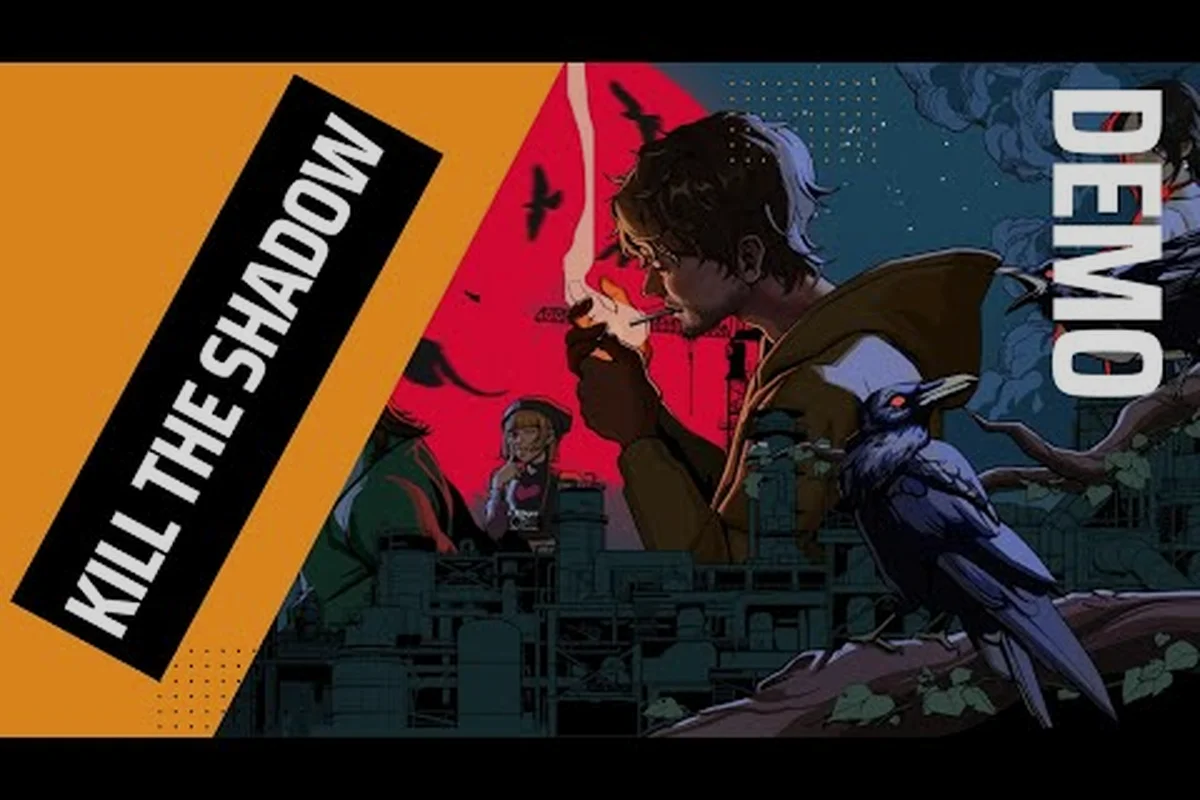
Kill The Shadow Spirit Ability Guide: Master Mind Games in Dark Tide City
The Spirit ability path in Kill The Shadow is the most cerebral of the three detective specializations, transforming protagonist Lucas from a hard-boiled investigator into something closer to a psychic interrogator. While Strength builds let Lucas kick down doors and Charm builds let him sweet-talk suspects, the Spirit ability turns every conversation, witness statement, and evidence board into a weapon of psychological pressure. If you have ever wanted to read a suspect like an open book, manipulate the emotional state of an informant, or unlock dialogue branches that reveal hidden guilt before you even pin evidence to the corkboard, this Kill The Shadow Spirit ability guide is built for you.
Developed by Shadowlight and set in the rain-soaked, neon-lit sprawl of Dark Tide City, Kill The Shadow blends 2.5D pixel-noir art direction with a layered RPG system where every choice Lucas makes feeds into his three ability stats. As confirmed by the GamingBolt developer interview, the team designed Strength, Spirit, and Charm as genuinely distinct playstyles rather than reskins of each other, meaning a Spirit-focused playthrough reshapes which locations you can fully explore, which companions trust you, and ultimately how you confront The Shadow entity that lives behind Lucas's eyes.
This guide breaks down the Spirit path from the ground up. We will cover how Spirit points are earned, how they interact with the corkboard deduction system, the best ways to combine Spirit with time rewind, and the specific dialogue tiers that make Spirit the most rewarding build for players who enjoy narrative detective work. By the end you will know exactly how to allocate Spirit from the opening case at Shipwreck Wharf all the way through the labyrinthine Pig Cage Walled City.
Understanding the Spirit Ability Path in Kill The Shadow
What Is the Spirit Ability Path?
The Spirit ability path represents Lucas's mental acuity, intuition, and resistance to psychological manipulation. Where Strength governs raw physical presence and Charm governs social persuasion, Spirit governs the things that cannot be punched or flirted into submission: subtext, deception detection, empathic reads, and the strange supernatural bond Lucas shares with The Shadow entity. As you raise Spirit, you unlock new dialogue options flagged with a distinct Spirit icon in conversation, and those options are often the only path to specific clue tiers, hidden confessions, and alternate endings.
Spirit is the path most closely tied to the central mystery of Kill The Shadow. The Shadow is not just a combat mechanic or a power source; it is a narrative entity that reacts to Lucas's mental state. High Spirit characters gain unique Shadow dialogue branches where the entity itself offers clues, raises doubts, and occasionally warns Lucas when a suspect is lying. For players who enjoy reading between the lines, this is where the game truly sings.
Spirit Ability Stat Distribution
Spirit grows as you make specific choices during investigation. The system rewards players who pay attention rather than players who act fast. Below is the general Stat Distribution for Spirit investment:
| Spirit Investment Method | Spirit Points Earned | Notes |
|---|---|---|
| Questioning suspects with empathy prompts | +1 to +3 | Best early-game source |
| Using The Shadow entity to probe memories | +2 to +4 | Requires Spirit 3+ |
| Reconciling contradictions on the corkboard | +2 | Pure deduction reward |
| Replaying events via time rewind to spot lies | +1 per replay | Stacks with other gains |
| Avoiding violence in confrontations | +1 passive bonus | Accumulates over the case |
| Meditating at safe houses (Kiki's noodle stand, Teddy's bar) | +2 per visit | Caps at once per chapter |
For a primer on how Spirit compares to the physical alternative, see our Strength Ability Guide, and for the social counterpart check out the Charm Ability Guide. For a complete progression plan, our Spirit Build Guide pairs perfectly with this article.
Spirit vs Strength vs Charm: Ability Path Comparison
The Three Pillars of Lucas's Detective Toolkit
Each ability path in Kill The Shadow opens a fundamentally different version of Dark Tide City. The comparison table below summarizes how Spirit stacks up against its sibling paths at the same overall level of investment.
| Ability Aspect | Spirit Path | Strength Path | Charm Path |
|---|---|---|---|
| Primary Focus | Mind games and intuition | Physical pressure and intimidation | Persuasion and social leverage |
| Best Dialogue Style | Empathic questions, silence, reflection | Threats, posturing, body language reads | Flattery, bargaining, casual rapport |
| Corkboard Synergy | Spotting contradictions, hidden ties | Forcing timeline reveals through fear | Extracting gossip from reluctant witnesses |
| Time Rewind Usage | Replay conversations to detect micro-expressions | Undo physical mistakes and missed paths | Replay social encounters for better outcomes |
| The Shadow Interaction | Entity speaks, offers cryptic clues | Entity acts as a blunt weapon | Entity seduces and misdirects targets |
| Ideal Companion Synergy | Captain Wang, Kiki | Teddy, dock informants | Kiki, informants, bribable clerks |
| Late-Game Unlock | Mind Palace boss battles | Brawl-heavy finale option | Diplomatic finale option |
| Risk Profile | High risk on physical checks | High risk on social finesse checks | High risk on supernatural checks |
Notice that Spirit is the only path that directly feeds into The Shadow's dialogue system. Players who lean into Strength may eventually brute-force a case, and Charm players can talk their way past almost any door, but Spirit players receive a literal second voice in their head offering information the others never hear. This makes Spirit the strongest path for narrative completeness even though it is rarely the strongest path for raw stat checks.
Which Path Should You Choose?
If you intend to play Kill The Shadow once and experience everything, Spirit is the canonical recommendation. It is the path Shadowlight designed the central mystery around. The corkboard deduction mechanics, the time rewind system, and the truth behind The Shadow entity all resolve most cleanly with a Spirit-built Lucas. That said, hybrid paths are absolutely viable. A 2-Strength / 2-Spirit / 1-Charm spread is a classic "detective who can throw a punch when he has to" build, and the Spirit Build Guide outlines several hybrid variants in detail.
How Spirit Ability Points Are Earned
Spirit Point Sources and Weighting
Spirit is not just handed out for talking. The game carefully tracks the quality of your investigative choices, and Spirit rewards intentional behavior. Below is a detailed weighting table for Spirit point acquisition across a typical case.
| Source | Base Spirit Reward | Multiplier Conditions | Approx. Max Per Case |
|---|---|---|---|
| Empathy dialogue option selected | +1 | +1 if suspect later confesses | +8 |
| Shadow probe on suspect | +2 | +1 if Shadow trusts Lucas (Spirit 5+) | +6 |
| Contradiction flagged on corkboard | +2 | +1 if flagged before final accusation | +10 |
| Time rewind used to revisit a conversation | +1 | +1 if you catch a new micro-expression | +5 |
| Restraint shown during a violent confrontation | +1 | +2 if combined with a Spirit dialogue choice | +6 |
| Listening to Kiki's stories at her noodle stand | +2 | +1 if you do not interrupt | +4 |
| Reading suspect journals, letters, diaries | +1 per document | +1 if document contradicts testimony | +8 |
| Honest conversation with Captain Wang | +2 | +1 if Lucas admits personal doubt | +4 |
Spirit Anti-Sources
Just as some actions grant Spirit, others cost it. Choosing Strength-flagged dialogue options when a Spirit option was available typically costs you 1 Spirit point. Using The Shadow aggressively against a civilian (rather than probing them gently) also reduces Spirit. The game does not punish you for occasional Strength choices, but if you want to keep Spirit high you should always look for the empathy or intuition icon before clicking the first available option.
Best Spirit Dialogue Unlocks and Investigation Tactics
Tiered Spirit Dialogue Unlocks
Spirit dialogue in Kill The Shadow unlocks in clean tiers. Each tier grants a small constellation of new conversation options, and you will know you have advanced when NPCs begin responding to questions they would not have answered at lower Spirit levels. The unlock table below summarizes the major dialogue tiers.
| Spirit Tier | Required Points | Unlocks | Example Use |
|---|---|---|---|
| Spirit 1 | 0 | Baseline intuition prompts | Ask suspects how they feel, not just what they did |
| Spirit 2 | 3 | Reading micro-expressions | Detect lies during first interviews |
| Spirit 3 | 6 | Shadow whispers | The Shadow hints at hidden guilt during key scenes |
| Spirit 4 | 10 | Empathic loop questions | Circle back to earlier answers and watch for drift |
| Spirit 5 | 14 | Memory dive | Use The Shadow to literally walk through a suspect's last hour |
| Spirit 6 | 18 | Silence as a weapon | Refuse to speak and let suspects fill the void |
| Spirit 7 | 22 | Spirit-only confession route | Access endings and resolutions closed to Strength/Charm |
Spirit-Heavy Investigation Walkthrough
The opening case at Shipwreck Wharf is the best place to learn the rhythm of a Spirit-focused run. Below is a step-by-step Spirit-first approach to the wharf investigation.
-
Arrive at the scene without rushing. Walk the full length of the docks before talking to anyone. Reading the environment grants a hidden +1 Spirit bonus.
-
Speak to the dock watchman first. Choose the empathy prompt: "You look like you haven't slept in days." This unlocks an extra clue he only shares with high-Spirit detectives.
-
Talk to Kiki at her noodle stand nearby. Listening to her full story without interrupting grants +2 Spirit and unlocks a side thread that later feeds into a key contradiction.
-
Pin every clue to the corkboard before accusing. Spirit rewards methodical corkboard work. Each contradiction you flag before the accusation scene nets +2 Spirit.
-
Use time rewind liberally. If a suspect's story changes between two replays, you catch a micro-expression worth +1 Spirit and a unique dialogue branch.
-
Confront the suspect with silence. At Spirit 4+ you can simply ask one question and wait. Most suspects fill the silence with damning details.
This rhythm of observe, listen, organize, replay, confront is the Spirit build's signature loop, and it scales beautifully into the more complex investigations in the Pig Cage Walled City.
Spirit Build Synergies with Time Rewind and The Shadow
Combining Spirit with Time Rewind
The time rewind mechanic is shared across all builds, but Spirit uses it in uniquely productive ways. A Strength player rewinds to retry a physical action. A Charm player rewinds to retry a social roll. A Spirit player rewinds to observe. Because Spirit rewards detecting micro-expressions, subtle contradictions, and emotional drift, time rewind becomes a forensic tool rather than a retry button. Each replay of the same conversation may reveal slightly different body language, breathing patterns, or eye movements if your Spirit is high enough.
In practical terms, Spirit players should rewind at least three major conversations per case. The first pass is for information. The second pass is for inconsistencies. The third pass is for the emotional tell that only Spirit-built Lucas can perceive. This three-pass rhythm is a Spirit build's signature tempo and is the single biggest source of bonus Spirit points in any case.
The Shadow Entity in Spirit Builds
The Shadow entity is the supernatural presence bonded to Lucas, and Spirit is the path that develops its most interesting capabilities. At Spirit 3 and above, The Shadow begins offering whispered observations during conversations. At Spirit 5, you unlock the Memory Dive ability, which lets The Shadow project Lucas into a reconstructed scene from a suspect's recent past. Memory Dives are Spirit-only and are required to access several of the game's most rewarding clue tiers.
It is important to note that The Shadow is not unconditionally cooperative on the Spirit path. Shadowlight deliberately designed The Shadow to challenge Lucas's assumptions, sometimes accusing suspects Lucas intuitively trusts and defending suspects Lucas intuitively doubts. High Spirit means you can push back on The Shadow, but the best Spirit players treat The Shadow as a partner whose instincts are worth weighing rather than obeying or ignoring.
Recommended Spirit Progression for Dark Tide City Cases
Spirit Progression Milestones by Chapter
Because Dark Tide City unfolds across multiple cases of escalating complexity, planning your Spirit growth across the campaign is essential. The table below outlines the recommended Spirit milestones for each major story beat.
| Story Chapter | Recommended Spirit | Key Spirit Moment | Major Spirit Reward |
|---|---|---|---|
| Prologue (Shipwreck Wharf) | 3 | First Memory Dive | Unlocks empathy dialogue branch |
| Case 1 (Harbor District) | 6 | Captain Wang trust scene | Wang shares classified file |
| Case 2 (Midnight Market) | 9 | Contradiction unlocks secret vendor | New side quest chain opens |
| Case 3 (Pig Cage Walled City) | 13 | Pig Cage memory dive on Kiki | Hidden Kiki backstory revealed |
| Case 4 (Industrial Quarter) | 17 | First Shadow-vs-Lucas disagreement | Learn to push back on Shadow |
| Case 5 (City Hall Conspiracy) | 20 | Spirit-only interrogation | Access unique confession |
| Finale (The Shadow confrontation) | 22+ | Spirit 7 unlocks final truth ending | True ending achievement |
Notice how the curve ramps sharply from Case 3 onward. Pig Cage Walled City is where Spirit investment begins paying compounding dividends, because the case is intentionally designed around contradictions and emotional reveals rather than physical confrontations. By the finale, a Spirit 22+ Lucas is essentially operating on a different plane of investigative capability than a Strength 22+ Lucas, and the endings diverge accordingly.
Late-Game Spirit Tips
Once you cross Spirit 14, your dialogue tree explodes with new branches. A few tips for the back half of the campaign:
-
Always save before Memory Dives. They are scripted sequences but Spirit-based ones have small variation, and a save-scum can let you see alternate Shadow reactions.
-
Don't ignore Charm entirely. A Spirit 18 / Charm 4 hybrid gives you the best late-game flexibility, especially for unlocking Teddy's hidden loyalty scene.
-
Return to the corkboard often. Late-game cases introduce multi-layered conspiracies that only resolve correctly if you have been maintaining the corkboard in real time.
-
Use Captain Wang. Captain Wang is the best Spirit-aligned companion in the late game and will flag Spirit opportunities you might otherwise miss.
Spirit Ability FAQ
Is the Spirit ability path the best in Kill The Shadow?
There is no single "best" ability path in Kill The Shadow, but Spirit is the most narratively complete path and the one Shadowlight designed the central mystery around. If you want to experience the full truth about The Shadow entity and unlock the true ending, Spirit is the canonical recommendation. For more combat-heavy or social playthroughs, Strength or Charm will serve you better.
Can I respec my Spirit points in Kill The Shadow?
Yes, but at a cost. After completing Case 2 (Midnight Market), Lucas gains access to a meditation chamber in Kiki's noodle stand where you can reallocate spent Spirit points once per chapter. The respec is free in points but costs a small amount of in-game currency and locks you out of any Spirit-locked dialogue choices you have already passed, so it is best to plan ahead rather than respec frequently.
How does Spirit interact with The Shadow entity in Kill The Shadow?
High Spirit unlocks deeper conversations with The Shadow entity, including the Memory Dive ability at Spirit 5 and unique Shadow dialogue branches from Spirit 3 onward. Spirit is the only path where The Shadow actively assists in investigations rather than just acting as a blunt weapon or social distraction. This is also the only path where Lucas can meaningfully disagree with The Shadow during the finale.
Should I play Spirit on a first playthrough of Kill The Shadow?
Yes, Spirit is the strongest first-playthrough choice for new detectives. It rewards the methodical playstyle most first-time players naturally adopt, and it provides the most forgiving difficulty curve because Spirit-built Lucas rarely fails non-physical checks. Strength is more forgiving in physical encounters, and Charm is more forgiving in social encounters, but Spirit is more forgiving overall. Pair this build with our Spirit Build Guide for an optimized first run.
Does Spirit affect the corkboard deduction system in Kill The Shadow?
Spirit directly affects the corkboard deduction system in two major ways: it unlocks higher-tier clue categories when pinning evidence, and it rewards faster contradiction resolution. A high-Spirit Lucas can spot logical inconsistencies between pinned clues that lower-Spirit Lucas simply cannot see, which opens additional deduction branches on the corkboard itself.