
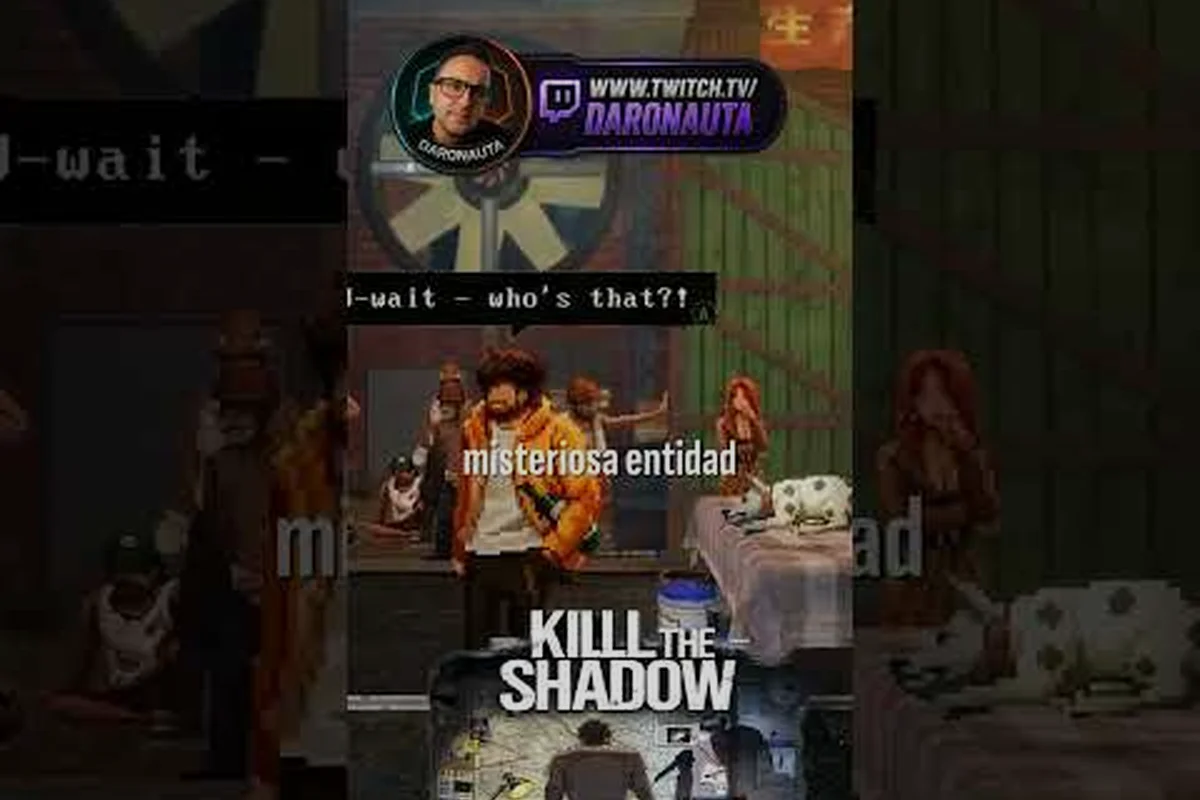
What is Kill The Shadow? A 2.5D Pixel-Noir Detective RPG
Kill The Shadow is a 2.5D pixel-noir detective RPG developed and published by Shadowlight, and it has been turning heads since it landed on Steam with an impressive 87% Positive review rating among user reviews. The game blends the nostalgic charm of retro pixel art with the depth and atmosphere of modern 3D environmental design, creating an experience that feels both familiar and refreshingly original. Set in the rain-slicked, neon-drenched streets of Dark Tide City, the game casts players as Lucas, a brooding detective haunted by a literal shadow creature known as The Shadow, an entity bound to him that fuels his supernatural investigative abilities.
What makes Kill The Shadow particularly compelling is its layered world-building. Dark Tide City is not a single monolithic location but a fractured urban landscape divided by class, crime, and corruption. Two of its most iconic districts—the densely overpopulated Pig Cage Walled City and the dilapidated dockside Shipwreck Wharf—serve as the primary theaters of operation, each offering its own visual identity, social tensions, and cast of suspects. Whether you are canvassing the narrow alleys of the Pig Cage or interrogating dockworkers under flickering harbor lights, the world feels alive and morally ambiguous.
For newcomers curious about the broader state of indie detective games, our 2026 game review roundup places Kill The Shadow firmly in the upper tier of narrative-driven releases this year. If you are also interested in how the game has evolved since launch, our ongoing Steam update coverage tracks every patch, balance change, and content drop. Combined with our broader review score breakdown system, this article aims to give you the most thorough Kill The Shadow Steam review currently available online.
Kill The Shadow Steam Review: Core Gameplay Features
The core loop of Kill The Shadow revolves around three interconnected systems: exploration, corkboard deduction, and time rewind combat. Each system feeds into the others, creating a satisfying detective simulation where every clue you gather and every stat you invest in changes how your story unfolds. The table below summarizes how these systems interlock.
| System | Input | Output | Build Interaction |
|---|---|---|---|
| Exploration | NPC dialogue, environment scans | Evidence cards, district access | Charm opens dialogue; Strength opens doors |
| Corkboard Deduction | Evidence pins + red string connections | Insight Points, new dialogue unlocks | Spirit reveals hidden threads |
| Time Rewind | Rewind charges (limited per scene) | Tactical repositioning, dialogue retries | Spirit extends buffer; Charm reduces cooldown |
Exploration and Investigation
Dark Tide City is built in a striking 2.5D perspective, meaning environments are constructed from layered 3D assets rendered with pixel-art shading. Walking through the Pig Cage Walled City feels claustrophobic and oppressive, with hanging laundry, rusted fire escapes, and crowded street markets filling the visual frame. Shipwreck Wharf, by contrast, is open, salty, and melancholic, with grounded ships swaying against rotting pilings. Lucas can interact with dozens of NPCs in each zone, each with their own dialogue trees, schedules, and secrets.
The Corkboard Deduction System
More than any single mechanic, it is the corkboard deduction system that defines the investigative heart of Kill The Shadow. After collecting evidence—witness statements, fingerprints, audio logs, weapons, and supernatural residue from The Shadow—players return to Lucas's office and pin every clue to a physical corkboard. From there, you draw red string between connected pieces, hypothesize motives, and unlock new dialogue options or even entire quest branches. The system is intuitive enough to pick up in minutes but deep enough that a fully wired board can sprawl across the entire screen like a true conspiracy map.
Time Rewind Mechanics
The time rewind mechanic is where Kill The Shadow distinguishes itself from traditional detective RPGs. When Lucas takes damage in combat, instead of dying outright, his personal timeline fractures, allowing him to rewind a few seconds to reposition, dodge, or reapply a buff. Once his "rewind charges" are exhausted, however, death is permanent for that encounter. This makes every fight a tense calculation of risk and resource management, especially on higher difficulty settings.
The Corkboard Deduction System: Investigating in Dark Tide City
Let us dive deeper into what makes the corkboard deduction system the heart of the Kill The Shadow Steam review conversation. Many detective games have tried to simulate the act of "thinking like a detective," but few do it as elegantly as Shadowlight does here. The corkboard is not just a menu—it is a tactile, draggable interface where evidence items have weight, texture, and context. A bloodied switchblade carries different meaning depending on whether you pin it next to a suspect's photograph or a financial ledger.
When you link two pieces of evidence and correctly identify a relationship, Lucas earns an Insight Point, which can be spent to unlock new dialogue persuasions, scan abilities via The Shadow, or passive bonuses during combat. Insufficient evidence or false deductions result in dead-end leads, wasted time, and sometimes even false accusations that lock you out of certain endings. This risk-and-reward design encourages thorough exploration rather than brute-forcing conclusions.
For players who love this style of deduction gameplay, our broader coverage of top detective RPGs of 2026 compares Kill The Shadow against genre contemporaries. What stands out is how naturally the corkboard integrates with Lucas's personal story. Because The Shadow occasionally manifests phantom clues—ghostly visuals that only Lucas can see—the corkboard also doubles as a window into his fractured psyche. Pinning a phantom clue alongside a real one can trigger introspective cutscenes that reveal new backstory layers.
Time Rewind Mechanics and Combat Builds in Kill The Shadow
While investigation is the soul of Kill The Shadow, the combat system provides the muscle. Combat is turn-based with timing-based modifiers, and the time rewind mechanic layers an entirely new tactical dimension on top of standard RPG fare. Below is a quick reference table summarizing how the three primary build paths compare.
| Build Path | Core Stat | Combat Style | Best Paired With |
|---|---|---|---|
| Strength | STR | Heavy melee, stagger, area denial | Aggressive corkboard strategies |
| Spirit | SPI | Shadow summons, AoE curses, debuffs | Heavy lore-focused runs |
| Charm | CHA | Persuasion buffs, support, non-lethal takedowns | Pacifist detective playthroughs |
The Strength Build Path
The Strength build transforms Lucas into a close-quarters bruiser. With high STR, his physical attacks deal devastating stagger damage, allowing him to interrupt enemy turns and chain combo strikes. This build pairs especially well with a corkboard strategy focused on physical evidence—fingerprints, weapons, footprints—since Strength also unlocks environmental destruction options during investigations, such as breaking down doors or forcing confessions through intimidation.
The Spirit Build Path
The Spirit build is the most lore-rich of the three paths. By investing heavily in SPI, Lucas deepens his bond with The Shadow, unlocking new entity abilities such as "Phantom Read," which lets him perceive hidden supernatural clues on the corkboard. In combat, Spirit-fueled abilities summon shadow constructs that deal damage-over-time and apply fear debuffs to enemies. Players pursuing the true ending of Kill The Shadow will almost certainly want to invest heavily in Spirit, as several late-game scenes require SPI thresholds to access.
The Charm Build Path
The Charm build is the most unconventional but arguably the most rewarding for detective purists. With high CHA, Lucas can talk his way through most combat encounters, converting enemies into informants or simply persuading them to stand down. The Charm build also unlocks unique corkboard dialogue options that can resolve entire cases without violence, making it the preferred path for players seeking the Pacifist Detective achievement and its associated ending.
Kill The Shadow Characters: Lucas, The Shadow, Captain Wang, Kiki, and Teddy
A detective RPG is only as strong as its cast, and Kill The Shadow delivers a memorable ensemble of allies, informants, and antagonists. Below is a quick-reference table summarizing the key characters you will encounter throughout the story.
| Character | Role | District | Notable Trait |
|---|---|---|---|
| Lucas | Protagonist / Detective | All of Dark Tide City | Bound to The Shadow |
| The Shadow | Supernatural entity / Partner | Manifests near Lucas | Grants rewind charges |
| Captain Wang | Police Captain / Rival | Shipwreck Wharf | By-the-book but corrupt-adjacent |
| Kiki | Street urchin informant | Pig Cage Walled City | Knows every alley and secret |
| Teddy | Forensics specialist | Lucas's Office | Analyzes physical evidence |
Lucas himself is a compelling protagonist because he is not a clean-cut hero. He is an ex-officer who left the force after a case involving The Shadow went catastrophically wrong, and the entity has since tethered itself to his soul. His cynicism is balanced by genuine compassion, and his voice acting carries a weary warmth that grounds the supernatural elements of the story.
Captain Wang serves as Lucas's primary foil and occasional reluctant ally. Head of the Harbor Division stationed out of Shipwreck Wharf, Wang believes in law and order but is willing to bend rules when it serves the greater good. Their dynamic is a slow-burn evolution from mutual distrust to grudging respect, and several pivotal quests hinge on whether you choose to cooperate with or obstruct Wang's investigations.
Kiki, the young informant who operates out of the Pig Cage Walled City, is one of the game's most charming characters. Despite her age, she knows the underground economy of the Walled City better than any adult, and she serves as Lucas's eyes and ears in places he cannot safely enter. Recruiting her as a permanent partner opens up an entire sub-network of side quests focused on street-level crimes.
Teddy, finally, is the quiet backbone of the operation. Operating out of Lucas's office, Teddy handles the technical side of detective work—analyzing blood samples, reconstructing crime scenes from photos, and verifying the authenticity of physical evidence before it goes on the corkboard. Investing in Teddy's trust unlocks lab upgrades that improve evidence clarity and even reveal hidden secondary clues.
Kill The Shadow Locations: Pig Cage Walled City and Shipwreck Wharf
The two primary districts of Dark Tide City each carry their own gameplay identity. The Pig Cage Walled City is a hyper-dense slum where sunlight rarely reaches the ground. Built into a massive concrete enclosure, it houses thousands of lower-income residents in stacked, interconnected tenements. Quests here tend to focus on missing persons, gang disputes, and the ever-present threat of corporate exploitation. Kiki operates here, and many of the Charm build's most rewarding dialogue trees occur in this district.
Shipwreck Wharf, on the other hand, is a coastal industrial zone filled with grounded vessels, salvage yards, and import warehouses. The crimes here are larger in scale—smuggling operations, dockworker murders, and offshore disappearances. Captain Wang's jurisdiction covers this area, and Strength-focused players will find plenty of opportunities to physically intervene in dock disputes.
For more on the broader reception of Kill The Shadow and how it compares to similar titles, the Steam store page offers community-curated insights and developer responses—you can check the official Kill The Shadow Steam listing for the most current price, system requirements, and player filters. As of this writing, the game holds an 87% Positive rating, a number that has remained remarkably stable across recent patches, suggesting broad consensus on its quality.
Final Verdict: Is Kill The Shadow Worth Playing?
Bringing all of these elements together—haunting pixel-noir aesthetics, deep corkboard deduction, tense time rewind combat, three distinct build paths, and a memorable cast across two richly designed districts—Kill The Shadow earns its place as one of the standout detective RPGs of 2026. The 87% Positive rating on Steam reflects a game that knows exactly what it wants to be and executes that vision with care.
Strengths include the tactile satisfaction of the corkboard system, the strategic depth added by time rewind, and the genuine emotional weight of Lucas's relationship with The Shadow. Minor weaknesses include occasional pacing dips during evidence collection in the mid-game and a learning curve that may intimidate players unfamiliar with deduction-heavy RPGs. However, these are small blemishes on an otherwise excellent experience.
If you enjoy narrative-driven detective games and do not mind some combat friction, Kill The Shadow is absolutely worth your time and money. Whether you choose the brute-force Strength path, the lore-rich Spirit path, or the silver-tongued Charm path, your playthrough of Dark Tide City will feel uniquely yours.
Steam Review FAQ
Is Kill The Shadow worth buying on Steam in 2026?
Yes, Kill The Shadow is absolutely worth buying on Steam in 2026. With an 87% Positive rating, deep corkboard deduction gameplay, satisfying time rewind combat, and a richly written noir narrative, the game offers dozens of hours of content. Multiple build paths and endings further extend its replay value, making it a strong purchase for detective RPG fans.
How long does it take to beat Kill The Shadow?
A single playthrough of Kill The Shadow takes roughly 25 to 35 hours depending on how thoroughly you investigate side cases and wire up your corkboard. Completionists pursuing all three build endings and the hidden Pacifist Detective achievement can expect 60 to 80 hours of total gameplay across multiple runs.
Can you play Kill The Shadow without prior knowledge of the genre?
Absolutely. While the corkboard deduction system has depth, it is presented intuitively through a drag-and-pin interface that newcomers can learn in minutes. The time rewind mechanic is also forgiving, allowing new players to experiment with combat without permanent punishment. Beginners should start with the Charm build for the gentlest learning curve.
Does Kill The Shadow have multiplayer or co-op features?
No, Kill The Shadow is a strictly single-player experience. The narrative focuses entirely on Lucas's personal journey with The Shadow, and the corkboard deduction system is designed for solo investigation. However, community discussion and shared corkboard screenshots have become popular on social media, creating an informal multiplayer atmosphere around the game.
Will Kill The Shadow receive future content updates?
Based on Shadowlight's public roadmap and ongoing Steam update coverage, yes. The developers have confirmed at least one major story expansion focused on Captain Wang's backstory, additional Spirit build content, and a new district beyond the Pig Cage Walled City and Shipwreck Wharf. Players who buy now can expect meaningful post-launch support.