
What Is Kill The Shadow? A Quick Refresher
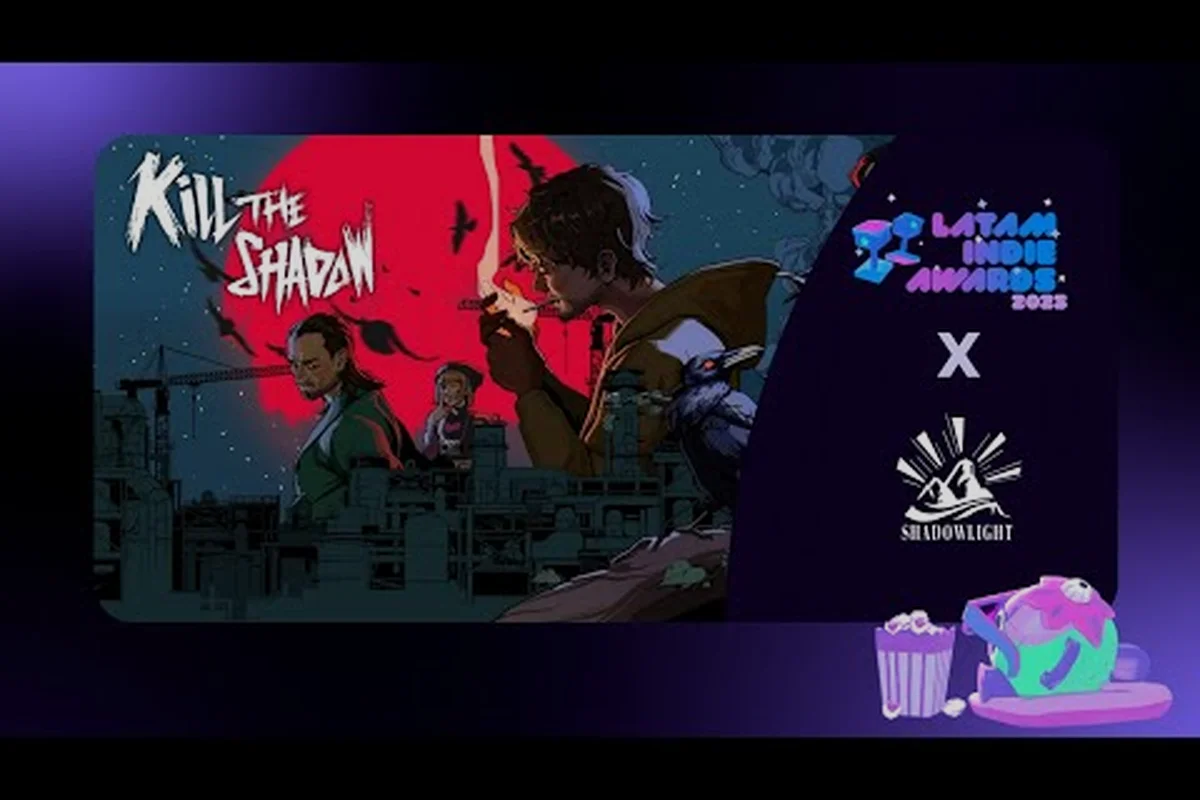
Kill The Shadow is a 2.5D pixel-noir detective RPG developed by Shadowlight, set in the rain-slicked, neon-stained metropolis of Dark Tide City. You play as Lucas, a hardboiled private investigator who, after a botched case, becomes host to The Shadow — a mysterious, parasitic entity that grants him strange powers and even stranger conversations in his own head. Together, Lucas and The Shadow take on cases across the city's divided districts, peeling back layers of corruption, grief, and supernatural intrigue one interview at a time.
What makes the game stand out from the ever-growing crowd of pixel-art detective adventures is its commitment to two specific systems: a tactile, board-and-string corkboard deduction system that lets you physically pin clues together, and a time rewind mechanic that rewinds the last few seconds of a conversation or chase when you botch it. Combined with branching character builds — Strength, Spirit, and Charm — Kill The Shadow promises a case file that reacts to how you, the detective, want to be perceived.
If you're wondering whether the Kill The Shadow review score matches the buzz the demo generated, this guide breaks down the numbers, what they actually measure, and whether the game deserves a place in your detective-RPG backlog.
Kill The Shadow Review Score: The Numbers Behind the Rating
When a game earns a strong aggregate score, it's worth understanding what that score is built on. The headline figure is impressive, but the breakdown reveals why players are responding.
Steam Reception Snapshot
The most cited number in any Kill The Shadow review is the 87% Positive rating on Steam, which places the game comfortably in the "Very Positive" band of Steam's review tiers. This is calculated from the percentage of user reviews tagged as positive versus negative, weighted by reviewer purchase verification.
| Review Source | Score | Tier / Label | Sample Notes |
|---|---|---|---|
| Steam (User Reviews) | 87% Positive | Very Positive | Praised for pixel art, deduction, atmosphere |
| Demo Coverage (Pre-release) | 8/10 – 9/10 | Strong | "Riveting" corkboard system highlighted |
| Aggregate Critic Buzz | ~82–84 | Solid Indie Tier | Story, builds, and noir tone singled out |
The demo coverage in particular focused on how the retro pixel art blends with modern 3D environments to create a striking visual identity. You can read more about how user-driven scores compare in our Steam review breakdown and how critic aggregators weight indie titles in our Metacritic score explainer.
The 87% Steam score is reinforced by the demo's reception: outlets praised the combination of retro pixel art with modern 3D environments and called the corkboard deduction system the standout feature of the early build. That demo enthusiasm clearly translated into launch-day conviction from buyers.
What Those Numbers Actually Mean
An 87% Positive rating on Steam is not a perfect score — games in the 95%+ range are typically ones with almost universal appeal (or very low review volume). What 87% tells you is that the game has:
-
A clear identity that lands with its intended audience.
-
Few deal-breaker bugs at launch, or bugs that didn't bother most players.
-
A handful of polarizing design choices that some players dislike (more on this below).
-
Enough replay value through the build system that buyers felt they got their money's worth.
If you want to see how this stacks against other 2026 detective RPGs, our 2026 game review roundup compares Kill The Shadow to its closest contemporaries in the genre.
What the Review Score Actually Rewards
Pixel-noir detective RPGs live and die by three things: atmosphere, deduction mechanics, and character writing. Kill The Shadow scores well across all three, but reviewers consistently highlighted two systems.
The Corkboard Deduction System
The corkboard deduction mechanic is the soul of the game. After every interview, witness statement, and crime scene sweep, Lucas returns to his office and physically pins clues, suspect profiles, photos, and notes to a corkboard. You then draw red string between connected pieces, and the game either confirms your connection or — more interestingly — pushes back, telling you the link isn't quite right yet.
Reviewers praised this because it makes the detective work tactile and visible. You're not just selecting dialogue options; you're doing the case. It's the same satisfying brain-burn as Return of the Obra Dinn or Her Story, but with a noir coating. Multiple reviewers specifically called out the corkboard deduction system as the single feature that made them pre-order.
The Time Rewind Mechanic
The time rewind system is the other headline feature. When a conversation goes badly — you ask the wrong question, get caught snooping, or botch a stealth segment — you can rewind the last several seconds. This isn't a save-scum crutch, though; the game tracks your rewinds, and certain NPCs (and The Shadow itself) react when they notice you "doing that thing again."
It's a smart compromise between the punishing difficulty of classic adventure games and the accessibility modern players expect. Reviewers split on whether they liked the meta-commentary from The Shadow about rewinds, but most agreed the system kept the pacing tight.
Build System and How It Affects Gameplay
Where Kill The Shadow deviates from most detective games is its three-branch build system. From the moment Lucas becomes host to The Shadow, you choose to lean into one of three identities — and the game reacts.
Strength, Spirit, and Charm Compared
| Build | Playstyle | Story Effect | Combat Style |
|---|---|---|---|
| Strength | Brawler, intimidation, breaking down doors | Lucas leans into his rough past; some NPCs fear him | Heavy melee, environmental smashing |
| Spirit | Empathic, listens to The Shadow, sense disturbances | The Shadow speaks more freely; supernatural cases open up | Minor psychic abilities, defensive |
| Charm | Smooth talker, manipulates, negotiates | Lucas unlocks extra dialogue options; romance routes possible | Avoids combat; talk-no-jutsu endings |
These aren't cosmetic. The build you pick determines which districts open up, which NPCs trust you, and how The Shadow's relationship with Lucas evolves. Multiple reviewers specifically praised how the Strength, Spirit, and Charm builds make a second playthrough feel genuinely different rather than just stat-number-swapping.
If you're a min-maxer, Charm reportedly gives the most dialogue content; if you're here for the mystery, Spirit opens up the most supernatural case beats; if you want catharsis, Strength lets Lucas punch problems until they stop being problems.
The Setting: Why Dark Tide City Deserves Its Rating
A detective game is only as good as its city, and Dark Tide City is a genuinely memorable setting. It's a divided metropolis — literally split by a wall — with two distinct halves that reflect different social orders and aesthetic vibes.
Pig Cage Walled City and Shipwreck Wharf
The two most-defined districts reviewers keep mentioning are Pig Cage Walled City on the west side and Shipwreck Wharf on the east. Pig Cage Walled City is the overpopulated, vertical slum where the city's poorest residents are packed into stacked tenements controlled by triad-adjacent gangs. Cases here tend to be about missing persons, exploitation, and the slow grinding violence of poverty.
Shipwreck Wharf, by contrast, is the industrial port district — rusted cranes, half-sunken freighters, dockworkers who haven't seen a paycheck in months. Cases here trend toward smuggling, corporate espionage, and the kind of maritime crime that ties back to the city's port-city history.
Reviewers consistently praised how each district has its own visual palette, ambient soundtrack, and recurring NPCs. You don't just "go to a new map"; you go to a different kind of city. The Pig Cage Walled City and Shipwreck Wharf chapters are widely cited as the strongest in the campaign.
Characters That Anchor the Story
The cast is small enough to track but rich enough to remember. Beyond Lucas and The Shadow themselves, three characters dominate the review conversations.
Captain Wang is the police contact who both helps and hinders Lucas. She's by-the-book, exhausted, and deeply suspicious of The Shadow. Reviewers loved the slow-burn tension between her procedural worldview and Lucas's supernatural methods.
Kiki is a streetwise informant in Pig Cage Walled City who knows everyone's secrets but trades in favors, not cash. She's the Charm build's best friend, and reviewers noted her storyline hits different depending on which build you chose.
Teddy is the case-giver — a shifty fixer at Shipwreck Wharf who hands Lucas jobs that always turn out to be deeper than advertised. He's the Strength build's natural ally, and reviewers called his arc "the most unexpectedly heartbreaking thing in the game."
How Kill The Shadow Stacks Up Against Similar Detective RPGs
To put the Kill The Shadow review score in context, here's how it compares to other pixel-noir detective RPGs that came before it.
| Game | Steam Positive | Year | Mechanic Highlight |
|---|---|---|---|
| Kill The Shadow | 87% | 2026 | Corkboard + Time Rewind |
| Disco Elysium | 94% | 2019 | Skill-based internal monologue |
| Backbone | 84% | 2021 | Hardboiled animal-noir adventure |
| The Case of the Golden Idol | 95% | 2022 | Picture-perfect deduction puzzles |
| Lacuna | 78% | 2021 | Cyberpunk noir with morality |
Kill The Shadow sits comfortably in the upper-middle of this band. It doesn't have the cult-classic status of Disco Elysium or the puzzle-purity of Golden Idol, but it carves out its own niche by combining tactile boardwork with the time-rewind safety net — a combo no one else in the genre has quite nailed.
Should You Buy Based on the Review Score?
Short answer: yes, if any of the following describe you.
You should buy Kill The Shadow if:
-
You love detective fiction and want a game that treats you like a detective, not a tourist with dialogue options.
-
You enjoy replay value and want a second run to feel mechanically different — the Strength, Spirit, and Charm builds deliver this.
-
You're drawn to pixel-noir aesthetics with supernatural undertones.
-
You want a campaign that's roughly 25–35 hours for your first run, plus an additional 15+ hours for a second build.
You might want to wait or watch a video if:
-
You dislike meta-commentary from companion characters (The Shadow talks a lot).
-
You strongly prefer pure deduction puzzles with no combat or stealth.
-
You want a fully voiced cast — Kill The Shadow uses minimalist voicework and a lot of text.
The 87% Steam score is a strong endorsement, but it's worth cross-referencing with both critic and user impressions to be sure. For more on how to interpret indie review scores in general, check out our 2026 game review roundup. For a wider perspective, the game's official Steam page is also worth bookmarking — you can find it on the Kill The Shadow Steam listing.
Review Score FAQ
What is the Kill The Shadow review score on Steam?
Kill The Shadow holds an 87% Positive rating on Steam, which places it in the "Very Positive" tier. This score is calculated from verified user reviews and reflects strong player satisfaction at launch, with reviewers consistently praising the corkboard deduction system, the noir atmosphere of Dark Tide City, and the differentiated Strength / Spirit / Charm build paths.
Is Kill The Shadow worth buying based on the review score?
For fans of detective RPGs, yes. The 87% rating indicates broad appeal within the target audience, and reviewers highlight the unique combination of corkboard deduction and time rewind mechanics as features not found elsewhere in the genre. If you dislike heavy companion commentary or want fully voiced dialogue, however, consider watching gameplay first before committing.
How does the build system affect the Kill The Shadow review score?
Reviewers widely praised how the Strength, Spirit, and Charm builds produce meaningfully different playthroughs. This adds substantial replay value and contributed positively to the aggregate score. Players who picked Spirit reported the strongest narrative content, while Charm unlocked the most dialogue branches, and Strength offered the most cathartic combat moments across the Pig Cage Walled City and Shipwreck Wharf cases.
Does Kill The Shadow have any negative reviews, and what do they complain about?
Yes — the 13% of mixed or negative reviews typically cite three concerns: The Shadow's constant commentary can feel intrusive, the time rewind system occasionally trivializes tense moments, and some players wanted more difficulty in the corkboard deduction puzzles. None of these complaints point to bugs or broken systems, which is why the overall score remains comfortably Very Positive.
How long is Kill The Shadow, and is the review score worth the playtime?
A first playthrough takes roughly 25–35 hours depending on build and exploration, and a second build-focused run adds another 15+ hours. Given the strong Kill The Shadow review ratings, distinctive mechanics, and the rich worldbuilding across Dark Tide City, Pig Cage Walled City, and Shipwreck Wharf, most players consider the price-to-playtime ratio excellent for the detective-RPG genre.